Showing posts with label Korea Regions Travel. Show all posts

Wednesday, June 23, 2010

Wanna Win A Hotel Voucher For Seoul?

KNTO has launched an essay competition which will run until the 31st of July, 2010.  Share your experiences and photos of your holiday in Korea  to win a hotel voucher, passport holders or mobile phone charms. Click here for more information. Anyone interested? Don't know how popular this contest will be among those who aren't living in Korea - after all, one would still need to get the air ticket to claim the first prize. I once won a similar prize but never got round to enjoying the free stay in Korea because so much time had lapsed between the time the winners were announced and my visit to the country.

Credit: Pics from KNTO website.

Sunday, June 6, 2010

Free Rides From Seoul To Gyeongju and Jeonju

The Visit Korea Committee is certainly spoiling visitors - tourists can now enjoy free and comfy bus rides from Gwanghwamun area in downtown Seoul to Gyeongju and Jeonju.


1. Where?
  • Gwanghwamun area in downtown Seoul (Donghwa Duty Free Shop),
  • also free shuttle buses from Busan to Gyeongju ( from July 1)
2. When?
  • Every day of the week except Monday
3. How long does this offer last?
  • June 1, 2010 - December 31, 2010 ( so hurry! Make your weekend plans for day-tripping now!)
4. What times?
  • Click here for details
5. How do I get it?
  • Apply now at http://english.visitkoreayear.com (Korean, English, Japanese, Chinese)
  • "Sign up in advance through the Visit Korea Committee official home page at www.visitkoreayear.com (two tickets per person). If more than 28 people make reservations for any given day, there will be a random drawing to decide the winners of the free tickets. Winners will be announced on the homepage or individually notified by phone."
  • For more details on the free tickets, please email to qhyuni130@yahoo.com.
  • Inquiries: +82-2-6272-7301 (English) 
6. What are the perks beside the free round-trip ride?
  • The buses are comfortable 28-seaters, equipped with Internet connection, DVD systems with personal earphones, and various tourist guidebooks.
  • You also get free guidebooks of Gyeongju and Jeonju, a booklet about Korean culture and tours, a welcome-kit and a souvenir of “Visit Korea Year"
7. What are the drawbacks?
  • It seems to be only for day-trips and I can't imagine squeezing all the attractions of either city into a single day.
  • It's only for non-Korean nationals so if you planned going with a Korean friend, that would be tricky.
  • The drop-off and pick up point for Gyeongju doesn't seem very convenient as it is at the Bomun Lake Resort (Hyundai Hotel-Hilton Hotel-Concord Hotel) which is a distance away from the main attractions of Gyeongju. You'd have to get a bus or taxi to places like the tumulis, the museum, Seokguram Grotto or Bulguksa.

sources:
http://asiaenglish.visitkorea.or.kr/ena/FU/FU_EN_15.jsp?cid=1037293
http://www.visitkoreayear.com/
http://asiaenglish.visitkorea.or.kr/ena/SI/SI_EN_3_6.jsp?cid=996963
http://asiaenglish.visitkorea.or.kr/ena/SI/SI_EN_3_6.jsp?cid=794336

Friday, April 30, 2010

From Hola To Olle in Jeju

Seo or Suh Myung Sook, director of Jeju Olle ( pic by Ahn Sang-soo)

It all began when Suh Myung-sook said Hello or maybe it was Hola to Henney from Britain somewhere along the El Camino de Santiago. After 23 years working in the media, Suh had decided to quit her post as editor-in-chief of OhmyNews and take time off in Spain. The chance meeting with a fellow walker from Britain and the positive experiences on the long walk prompted her to develop her own pilgrimage trail back home.


Ms Suh decided that Jeju had the most potential and it wasn't long before she hit upon the name "Jeju Olle" for her project as the word "olle" in the Jeju dialect refers to "the narrow path between the street and one's doorstep".


If I were a documentary film-maker, I'd trace the story of how Ms Suh's dream was realised as she set up her trail exploration team, persuaded the people of Jeju ( skeptical landowners in particular) to agree to letting strangers on their land, and enlisted the manpower of soldiers training in a local camp.

Unfortunately for me, the Olle trails weren't opened yet when I visited Jeju but since the first trail opened in September, 2007, at least 14 other trails have been established mostly along the coastline of Jeju and more than 100,000 people have been able to enjoy the fruits of Ms Suh's endeavours. Some have voiced concerns that the popularity of the trails may have an adverse effect on the local ecology but I can't comment on that. All I can say is the more I see the pics of the trails, the more I wish I was in Jeju right this minute. I am so ready to hit those trails - well, not physically ready but mentally and emotionally -yeah!

Jeju can often seem too touristy with its resorts, amusement parks and various galleries and museums. But with its Olles, visitors in search of the natural face of Jeju should be able to find plenty of opportunities to commune with nature. I know I will,

Click here  or here for Routes 1 to 13 and click here for Route 14.

Download guidebook on Jeju Olle here.

For examples, see below:

Route 1 Admire views of Seongsan Ilchulbong Peak as you climb an oreum, pass through salt fields and end up in Gwangchigi Beach.


For more details: Routes 1, 4 and 6

Route No 4  Start from Pyoseon Beach Resort and make your way up Mang Oreum through a pine forest. Pass an old beacon mound before you reach Namwon Port and Keuneong Promenade.


Route No. 6 -Take a ride across the Soesokkak Estuary on a Te-u ( traditional boat) before visiting the Lee Jung Seop Gallery and the eco park around the Cheonjiyeon Falls. The walk ends at Oedolgae Seaside Promenade.


sources:
http://english.visitkorea.or.kr/enu/SI/SI_EN_3_6.jsp?cid=726174
http://www.koreatimes.co.kr/www/news/art/2010/01/144_52041.html
http://english.ohmynews.com/articleview/article_view.asp?at_code=437591
http://www.jejuolle.org/main/main.jsp
http://www.ssahn.com/archives/2008_03.htm

Thursday, April 29, 2010

Jeju, Samseonghyeol: Begin At The Beginning

The first stopover in Jeju for many tourists in guided tours may well be Yongduam Rock. But my friend and I thought we’d start with Samseonghyeol, which was close to the Hanmi-jang Yeogwan in the old section of Jeju town. Click here for a video of the place.


In the nearby museum, it had been mildly interesting to watch the animated video which recounted the legend of Tamna, the settlement we know now as Jeju. Three demi-gods apparently emerged from three holes to found Tamna. Subsequently, Go or Ko, Yang and Bu, originally hunter-gatherers became farmers when they married princesses from the Byeongnang Kingdom. Each spring and autumn, their descendants still perform special rites to honour them at altars near the three holes

The holes are supposedly linked to lava tubes which lead who knows where. I don’t suppose anyone has really explored them, judging from the grass-covered appearance of the three depressions in the ground of this supposedly sacred site. I’d love to know if they actually lead to someplace interesting. One website made this claim: “The holes are forming triangular shape together and do not get wet by rain drops or snow. Trees surrounding them look as if they are bowing the three founders which amazes visitors.”

Don’t know about THAT but I was impressed by the peaceful ambience of the park. The trees did more for me than the holes of Samseonghyeol.

sources:
http://www.teachenglishinasia.net/samseong-hyeol
http://www.orientalarchitecture.com/koreasouth/jeju/samseonghyeol.php
http://english.tour2jeju.net/main/view.php?idno=50058
http://www.samsunghyeol.or.kr/introduction.html
http://en.wikipedia.org/wiki/Tamna
http://english.tour2jeju.net/main/movie.php?idno=50058

Tuesday, April 6, 2010

Hwaseong,Suwon - A Fortress For A Father

Wish I had read Bruce Cumings' "Korea's Place in the Sun - A Modern History" before I visited Suwon. I would have appreciated Hwaseong fortress a lot more if I had a fuller picture of the sad Prince Sado then. As it was, it was a rushed visit to Suwon, coming at the tail end of my 2005 autumn tour. I'd taken the inter-city bus from Yongdae-ri into the city after spending a few peaceful days in Baekdamsa. Not exactly a wise move as the contrast between the idyllic setting in Soraksan National Park and the busy urban landscape was too jarring. Then it was a quick tour of the Korean Cultural Village just outside of Suwon before making the all-too-hasty decision to cover only the western half of the fortress wall as I was pressed for time.


Told myself that I'd complete the circuit in another visit. Ha - how optimistic I was. Now I have to be content to be an armchair traveller to revisit Hwaseong. Fortunately, there're a few interesting websites that I hope to explore more fully in the days to come. Plus, am re-reading the section from Cuming's book which describes how Prince Sado was forced to kill himself after his scandalous behaviour and how Hwaseong Fortress was eventually built by his son, Jeongjo, in memory of his late father.

Of course, the fortress isn't simply an elaborate shrine to commemorate one's parent. It was designed to repel invasions by the Japanese but it was also intended as an alternative capital. King Jeongjo evidently had a bone to pick with Seoul in more ways than one.

source:
http://asiaenglish.visitkorea.or.kr/ena/CU/CU_EN_10_4_3_1.jsp

Sunday, March 28, 2010

Korea's Own Orient Express?

Just stumbled upon this KNTO webpage which features a luxury train which also stops at Namwon in one of its tours. Click here for routes. I love train rides and have tried the mugunghwa service once from Gyeongju to Danyang and a faster train from Danyang back to Seoul.


Don't think I could afford this though - can only fantasise about winning a such a prize in some future contest!
Besides, I might just get too caught up checking out the lavish and luxurious facilities on board that I'd forget to look out the window!


Source:
http://www.knto.or.kr/ena/SI/SI_EN_3_6.jsp?cid=825410

Tuesday, March 23, 2010

Seduced By Maps

Ever been seduced by the promising look of maps? They lay out before you an array of national parks, towns, temples, beaches like a generous buffet of appetizers, main courses and desserts. Whenever I start planning a DIY tour of Korea, I tend to get greedy and want to cram as many places as possible into a few weeks of travel. Maybe less is more but most of these places are really small towns and the main attractions can be covered within a short time though the locals may disagree.

This was my itinerary during my 2007 trip ( 26th March - 7th April). All connections made by inter-city or local bus. It wasn’t too difficult learning the basic phrases to buy bus tickets at the bus stations because I had learnt to read Hanguel ( thank you again, King Sejong for devising such an easy to read writing system!)

26. 3 Arrived Incheon International Airport – Gyeryeongsan ( Donghaksa)
27. 3 Gyeryeongsan – Jinju ( via Daejeon)
28.3 Jinju – Jinhae ( via Masan )
29.3 Jinhae ( Cherry Blossom Festival )
30.3 Jinhae- Namhae ( Daraengi Village)
31.3 Daraengi – Boriam in Namhae
1.4 Boriam – Ssangyesa ( via Hadong)
2.4 Hadong – Namwon
3.4 Namwon – Maisan ( via Jinan)
4.4 Maisan ( Tapsa) - Naesosa ( in Byeonsanbando) via Buan
5.4 Naesosa - Gyeokpo ( in Byeonsanbando)
6.4 Gyeokpo – Seoul ( via Buan)
7.4 Seoul – Incheon International Airport

Next post: Namwon!

Friday, February 26, 2010

Getting to Naesosa, Part 3


Getting there - take the bus to Buan Bus Terminal and then board the bus which goes around  Byeonsan-bando ( services are between 6 30 am and 830 am every 20 -30 minutes; trip to Naesosa takes about 50 minutes)


Get off at the Naesosa bus stop and walk past the usual row of shops, sikdangs ( restaurants) and minbaks to reach the fir-lined entrance to Naesosa.


The fir-tree avenue gives way to a broader path flanked by cherry and maple trees. BTW, this path was featured in one episode of Daejanggeum when the heroine played by Lee Young-Ae returned to the palace after taking care of a nanny to the royal family. The pond where the lead character, Janggeum sits mournfully throwing pebbles into the water after a tiff with her mentor, can be found on one side of this lane.


Fortunately for me, there was ample room for me to stay overnight in the temple, provided of course, that I followed their basic rules. In summer, I suspect, it would be difficult for single travellers to stay here as Naesosa is popular with groups who come for summer camps.

sources:
http://www.cha.go.kr/servlet/Download?fid=TWpBPQ==&tname=Y2hndWlkZQ==

http://search.korea.net:8080/intro_korea2008/travel/pdf/01_19.pdf

Friday, January 29, 2010

How To Organise A Winter Festival, Korean-Style

Here's a brief and totally frivolous guide on how to hold a winter festival, inspiration courtesy of  the Inje Icefish Festival, currently held in Gangwon Province.

1. First, you need a cute mascot
....to helm your festive activities. This blue fella here reminds me of Doraemon but I can't decide if he or she's an otter or seal or some other creature.

2. Give visitors something to look forward to...
...such as fish they can savour on the grill at the end of the day. Make sure visitors have high chances of success so as to encourage annual returns to the festival. The smelt, a small silvery fish (Osmeridae family),  is easy to catch with basic fishing gear and is found in abundance during winter so it makes a great focal point for the Inje Festival. For more tips on how to catch your smelt, click here.


If Dads are too engrossed to teach the kiddies how to hook the bait, there are fishing classes for children.


3. Make sure your ice fest caters to all interest groups.
As the unofficial slogan for the Inje Ice Fest goes: "Ice fishing for dads, Smelts dishes for moms, Ice park for kids, Exotic dating courses for couples, and lots of recreations and winter sports to participate!"


3a. Haven't a clue what the exotic dating courses for couples means actually - I'm guessing either a bland ride around the lake in some snow sled or are there tiny igloos for couples to get really close and cosy?

3b. Give the foreigners something truly exotic to write home about  or post on their blogs by having contests to see who can eat the most raw smelt.


Remember to hold cooking lessons featuring recipes using smelt  for ajummas who may not fancy their fish raw.

3c.  Arrange for sporty visitors to take part in  matches on the ice or competitive games such as football or  tug-of-war.


3e. Don't forget those attracted to intellectual games - they can even play Chinese chess with the ice as their enlarged chessboard.


For full schedule for the 2010 fest, click here.


3f. Be prepared to cater to the variety of  interests - from kids who prefer to race each other to animal lovers who'd watch a real dog race to those who prefer more passive sports like playing PC games such as the one below.


sources:
http://world.kbs.co.kr/english/news/news_photo_detail.htm?No=14315 ( pics from Yonhap News )
http://english.visitkorea.or.kr/enu/SI/SI_EN_3_2_1.jsp?cid=292929
http://images.google.com.my/imglanding?q=inje%20ice%20festival&imgurl=http://english.visitkorea.or.kr/cms/resource/90/673990_image2_1.jpg&imgrefurl=http://english.visitkorea.or.kr/enu/SI/SI_EN_3_2_2.jsp&usg=__ywJQHCIlBjHxFtPGrLHExMPZg7g=&h=333&w=500&sz=74&hl=en&um=1&tbnid=hJpm0jwgraZyzM:&tbnh=87&tbnw=130&prev=/images%3Fq%3Dinje%2Bice%2Bfestival%26hl%3Den%26sa%3DN%26um%3D1&sa=N&um=1&start=3#tbnid=hJpm0jwgraZyzM&start=7
http://www.injefestival.co.kr/english/sub3/sub5.asp
http://adventureteachingkorea.wordpress.com/
http://www.gamesetwatch.com/2009/04/koreas_dogsledding_mmorpg_husk.php
http://www.youtube.com/watch?v=ISKh68C-Hxk

Monday, January 25, 2010

Drum Class, Jeonju Part 7

Found this youtube posting for a drumming class which is very similar to the session I attended at the Jeonju Traditional Cultural Centre.
Take my hat off to the citizens of Jeonju and whoever else funded this project so that foreign visitors could enjoy a truly memorable hands-on experience on the traditional drums.


source: http://www.youtube.com/watch?v=-rd3CYDZIf0

Tuesday, January 19, 2010

Gyeonggijeon - Jeonju, Part 3

Our tour guide in September, 2003 was most anxious that we didn't miss this site during our stop-over in Jeonju.  At that time I wasn't in the right frame of mind to appreciate why he was willing to pass up on Pungnammun. Instead he was determined  that we spent a good part of an hour listening attentively to the local guide explain, not very coherently or clearly, the significance of this place. After all, most tourists come to the country without the benefit of Korean History 101 so a crash course in the various dynasties is likely to give the average person mental indigestion. Which comes before which -  Baekje or Joseon or Shilla?


Gyeonggijeon Shrine -a stone's throw away from Jeondong Cathedral

So very often, visits to sites of historical importance end up being clashes between the desire and pride of the patriotic and earnest Koreans who want to share their past and the befuddled foreigners  in packaged tours who can barely recall which city they were in the day before. Ironically TV dramas may help boost interest especially if one can relate the 3D reality of a building or temple to an exciting dramatic moment featuring some dashing general or unenlightened monarch with some ambitious concubine or vengeful lady-in-waiting.


To be honest, what mildly impressed me about Gyeonggijeon when we went there was its general atmosphere of peace and quiet. We had just emerged from  the noise of traffic and crowds in the city centre to find ourselves in this unexpected haven of tranquillity.


Though the shrine was enclosed within low walls, there was still a sense of space with long paths leading up to the main buildings.


The fact that the place was built to hold important artefacts like the portrait of the founder of the Joseon Dynasty, the mortuary tablets for a royal couple, palanquins ( see pic below) and a stupa housing some royal's placenta ( or is it umbilical cord?  See pic above) barely registered.


It was only after watching the TV drama, Painter of the Wind  a few years after that tour, that I had a better appreciation and stronger interest in royal portraits. Sometimes one can be in the right place at the wrong time. We were also probably too late to see the local seniors have their daily meetings here to play Korean chess or simply chit-chat. So we had to make do with the silent company of these figures mounted on the walls.


sources:
http://www.ocp.go.kr:9000/ne_dasencgi/full.cgi?v_kw_str=&v_db_query=A4%3A35&v_db=2&v_doc_no=00002437&v_dblist=2&v_start_num=131&v_disp_type=4
http://jikimi.cha.go.kr/english/search_plaza_new/EMapResultView.jsp?VdkVgwKey=13,03390000,35&queryText=(v_esidocode=35%3Cand%3E%20v_elcto=11)&strGuCode=11&strSidoCode=35&requery=
http://koreana.kf.or.kr/pdf_file/2006/2006_SPRING_E048.pdf
http://www.worknplay.co.kr/entertain/travel_view.php?num=497

Thursday, December 24, 2009

Top Ten Quintessential "Winter in Korea" Photos

Where else but in Korea can one witness such sights during winter? Here is my top ten list of quintessential "winter in Korea" photos.

1 Precious ingredients cooking outdoors in winter
Where else but in Korea can you see these plain earthernware pots containing kimchi, gochujang or other sauces which are fermenting nicely in frigid temperatures?


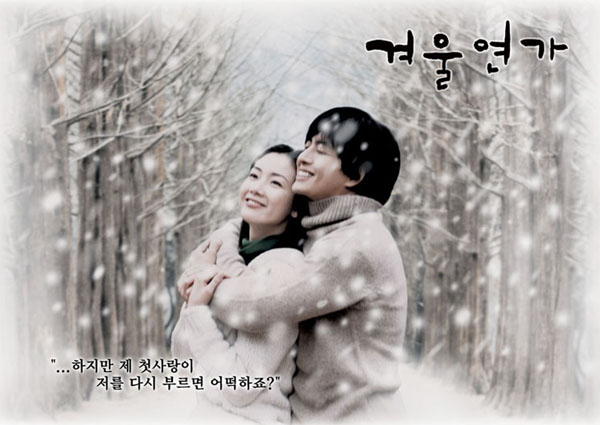
2 Winter Sonata
This Hallyu Wave TV hit drama has spawned countless tours to Nami Island and Yongpyeong Resort for local and foreign tourists seeking romance in the snow.


3. Snow-caped Temples and Pagodas
Ok - I know there are also temples and pagodas looking pretty in winter-time in China and Japan as well but I don't think they're featured as often and prominently by their tourist promotion boards. You can even download this winter wonderland scene for your desktop wallpaper by going to the KNTO website.


4. ROK soldiers fighting winter blues on duty
No holiday breaks for those on the front-line or the DMZ in the divided country which is still officially at war.


South Korean soldiers taking a snow bath to develop their toughness during winter mountain training exercises.


5 Pyongyang Naengmyeon
This cold noodle dish has become a popular summer dish but traditionally it was eaten in winter.  According to Song Won-sup, "enthusiastic Pyongyang naengmyeon lovers point out that the middle of winter, not summer, is the right season to eat naengmyeon. The true taste, they say, can be appreciated when you finish a bowl of cold watery kimchi and meat stock and walk out on the street to have the cold wind blow in your face."


I just had a bowl of naengmyeon today and though there's no winter where I am, the air-con was on and I still don't get it. Wouldn't it be nicer to have a hot steaming bowl of samgyetang or kimchi tchigae in winter? I don't believe in fighting fire with fire or beating the cold with a cold broth.'

6 Winter Festivals and Hot Spring Tours
A Korean friend once told me what he liked most about his country was the smell of winter. No clue what he means but I guess you can have plenty of opportunity to smell the snowflakes outdoors with the many festivals held throughout the country in winter. Take your pick -from the Daewallyeong Snow Festival, Hwacheon Mountain Trout Festival, Inje Icefish Festival, Taebaeksan Snow Festival.


If you prefer to stay indoors, join the many Koreans who think this is the best season to enjoy the jjimjilbang ( bath and sauna houses). Check out a KBS video on the wide range of spas where you can soak your cares away this winter.

7. Fantastic Snow Flower Train


Enjoy the winter sights outdoors whilst travelling in cosy comfort aboard a train that passes through Taebaeksan or Deogyusan.

8.  Pass-The-Briquettes - Community Service, Korean-style


Many Koreans sign up as volunteers to deliver coal briquettes to the homes of the less fortunate as early Christmas gifts. See earlier posting.

9. Exchanging Christmas gifts, Korean-style
According to a recent survey for an on-line job portal, the most desirable gift amongst Koreans, both men and women, is clothing.


Second most popular gift for Korean males would be small electronic devices while your Korean girlfriend, wife, sister or ajumma prefer bling-bling. Whatever you decide, DON'T give books or CDs. Apparently these are the least favoured gifts in the eyes of Koreans this winter.


Of course, if you want to be original, you could give your loved one a Hostas plant called Korean Snow ( described as having "  uniquely MISTED and STREAKED shiny green leaves with excellent substance". Click here for your last-minute or belated Xmas on-line shopping.

10. Welcome The First Sunrise in the New Year
Had a rotten year? Pray for better times alongside other Koreans who will brave the morning winter chills to greet the first sunrise of 2010.


sources:
http://www.history.army.mil/brochures/kw-stale/pic4.jpg

http://blog.asiahotels.com/wp-content/uploads/2008/12/temple-in-winter.jpg
http://joongangdaily.joins.com/article/view.asp?aid=2907555
http://asiaenglish.visitkorea.or.kr/ena/FU/FU_EN_15.jsp?cid=679201
http://world.kbs.co.kr/english/culturenlife/culturenlife_style_detail.htm?no=9146
http://www.koreatimes.co.kr/www/news/img/art/0812/081225_p9_welcome5.jpg

Thursday, December 10, 2009

Apsaras - Heavy or Heavenly Maidens? - Gyeongju, Part 6

Was browsing through the website of  the Gyeongju National Museum  the other day and was tickled to find an amusing blunder.


On the page which describes the famous Emile Bell or the Divine Bell of King Seongdeok, the description refers to the four apsaras as "heavy maidens sitting on the lotus flower cushion".


I've got a small reproduction of the Emile Bell, my one souvenir from Gyeongju which I couldn't resist splurging money to acquire and when I had a second look at the patterns on the replica bell, the ladies didn't look overweight to me.


Editing lapses aside, I'd say this website is a great introduction to would-be visitors to this famous museum and historic city. It has also been a great way for me to revisit Gyeongju to appreciate more fully its cultural legacy. I don't recall if there were the same explanatory notes in English for the artefacts on display when I visited the museum years ago but this website provides some useful and interesting information about some treasures in its vast collection ( it has over 210,000 items but only displays about 3000 artefacts).

Just click here  and then click on Exhibition Halls at the top bar. Look out for the famous Gold Crown and ornamental sheath for a dagger in the Archaeology Hall. Read carefully as well the description for a jar with clay figurines. Happy Exploring!

Tuesday, December 8, 2009

A Millennium-Old "Star-Watching Tower", Gyeongju Part 5

  Cheomseongdae's graceful profile is more beautiful at night

Cheomseongdae, according to one source, means “star-gazing tower”. Yet experts still are arguing about the actual functions of this striking structure in Gyeongju, according to Sang Sang-yong’s article in the Korea Journal. I’d take Song’s claim that it’s one of “the hottest in the history of debates in Korea” with a thimbleful of salt but let’s have a quick look at the options.


Was it built to read the sun, the stars, the clouds or something else?

Was this granite tower, shaped like a bottle, which was built during the reign of Queen Seondeok ( between 633 and 647 A.D.) intended and used as...
a. an astronomical observatory?
b. a meteorological observatory?
c. a symbolic monument to Shilla science?
d. a sacrificial altar to worship the god of agriculture?
e. an expression of the Shilla concept of religion?
f.  all of the above?

Two models  showing how people got to the top.


Frankly, I’d echo Rhett Butler’s parting words to Scarlett O’Hara but I’m more impressed with the fact that it’s remained standing for over 1,300 years and has barely shown any stress from seismic shifts. If indeed Cheomseongdae  is an astronomical observatory, it may  be the oldest one existing in Asia. I guess its longevity and its apparent nod to the scientific, cultural and architectural achievements of the Shilla Dynasty are reasons enough for national pride.

National Treasure No. 31 - A national symbol and a source of pride

At the same time, it's also interesting how the twelve stones at the base reflect the months while the 30 layers may represent the days in the month while apparently the position, angles and directions of the tower corners are aligned to some stars, according to the Lonely Planet.


Sauna at Pension Cheomseongdae - does it really look like the tower?


The next time I visit Gyeongju though, I think I'll go to Pension Cheomseongdae , situated near the Gyeongju Folk Handicraft Village instead. Its sauna, supposedly shaped like its namesake, is  heated naturally with pine logs and is open 24 hours so one could even bed down there for the night and dream instead of Hallyu stars.

Sources:http://www.ekoreajournal.net/archive
http://english.triptokorea.com/english/UserFiles/Image/daily%20tour/Gyeongju/Cheomseongdae%20Observatory.jpg
https://blogger.googleusercontent.com/img/b/R29vZ2xl/AVvXsEgYR1uOXyymdzw7DjcVnwIeorZxNycHfpLEuUyH7oyzP1_19mcQ0S0uAVev-Ud9ROaNPGTQgtVL_8e8c7Z8Jmnajc1xlUk5rJY7d8XIY1wkbgm5zoGZ0c8WSpcHWdhUNoUsc7rF0Yu98zw/s1600-h/SDC14828.JPG
http://farm4.static.flickr.com/3191/2832171984_8189b35ef7.jpg
http://i70.servimg.com/u/f70/12/80/22/63/para1010.jpg