Never had the chance to meet a Moran in person. Am clueless about her scent, despite her inclusion in the L’Occitane range. Yet, I admit, I’ve been prejudiced against her size and rather ostentatious appearance. That bias has been reinforced since I saw Dong Yi, the historical drama which featured Lady Jang Hui-bin (?-1701) , one of "the best known royal concubines of the Joseon Dynasty", according to Wikipedia. She was an ambitious woman who supposedly plotted against the queen and succeeded in getting the latter deposed. In one scene from the popular sageuk, Lady Jang gives orders to replace the modest bleeding heart flowers in the exiled queen's garden with the more showy peony with their profusion of petals.

So I never really bothered in the past to find out more about this flower known as Moran in Korea or the tree peony to garden enthusiasts. It seemed to be such a cliche in Chinese paintings and folding screens.
But a private joke has got me trawling the Net to learn a bit more about this "King of Flowers" as nicknamed by the Chinese. It represents quite a list of attributes - affluence , honour, high status, luck, happiness, elegance and poise.

Here is a snippet from primaltrek:
"One legend describes how Wu Zetian, the only Empress (690 -705 AD) of the Tang Dynasty, was drinking one day during the winter in the Imperial Flower Garden. While admiring the snow, she was also captivated by the fragrance of the winter flowers that were in bloom. She wrote a poem and sent it to the god in charge of flowers. The poem said that she would visit the garden again the next day and that all the flowers were to bloom and not wait until spring. The next morning hundreds of flowers were in bloom. But, the peony stubbornly disobeyed the order and refused to bloom. The Empress was enraged and gave orders that all the peonies in the capital city of Chang'an were to be banished. Those tree peonies that refused were burned to the ground. From that time on, the peony gained a reputation for resistance and rebellion. As time passed, however, the peony's reputation softened and gradually changed to one symbolizing longevity, loyalty, happiness and eternal beauty."
A pity. If the flower retained its original symbolism, I think I would like it more. The notion of a flower refusing to kow-tow to royalty seems much more appealing.

It also stood for national peace and security during the Joseon period. Perhaps that was what poet Kim Yeong-Nang (1903-1950) was alluding to in his poem below:
Until peonies bloom
I just go on waiting for my spring to come.
On the days when peonies drop, drop their petals,
I finally languish in sorrow at the loss of spring.
One day in May, one sultry day
when the fallen petals have all withered away
and there is no trace of peonies in all the world,
my soaring fulfillment crumbles into irrepressible sorrow.
Once the peonies have finished blooming, my year is done;
for three hundred and sixty gloomy days I sadly lament.
Until peonies bloom
I just go on waiting
for a spring of glorious sorrow.

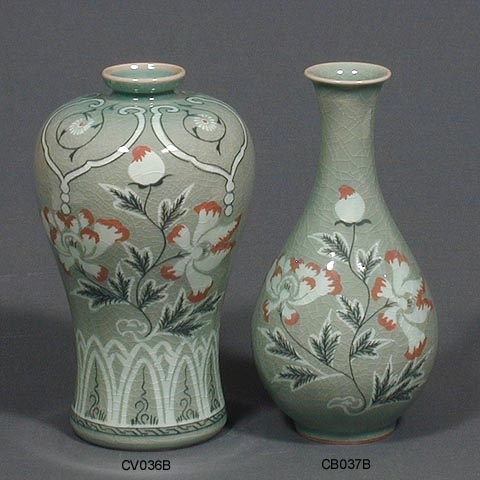
The flower even has its own genre known as peony paintings. Its profusion of petals has been depicted in peony tassels, hanbok decorations, pillow ends, celadon pieces, in fans used in a traditional dance. Seems as if there is a peony in every nook and corner of traditional Korean culture.

That seems to apply as well to modern Korean designs. The Peony Medal or the Order of Civil Merit was recently awarded to.Kim Yuna; it's the second most presitigious award for civilians. Check out Margaret Cho’s peony tattoo.

This late bloomer in spring is not just a pretty face - it is surprisingly a pretty tough plant. It's reputed to be low maintenance and can withstand the punishing temperatures of winter. Traditionally valued for its roots which were eaten, the peony was believed to have the power to treat “menstrual cramps, asthma and convulsions”.

These days, to admire the real deal, you could head for Changdeokgung or Deoksugung sometime around May as it blooms in late spring. Unfortunately I doubt I'll have the chance to see this anytime soon, so I just have to try harder not to be so prejudiced against this pretty face and learn to appreciate its multi-faceted nature, whether it's immortalised on a vase...

or an antique teapot....

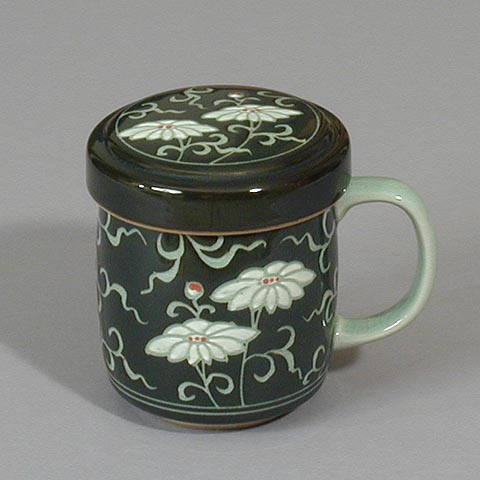
OR a modern coffee mug with cap....

on paper napkins ( see above) or treasure chests ( see below)


or super-ornate rice bins or traditional pillow ends.

http://hompi.sogang.ac.kr/anthony/KimYeongNang.htm
http://www.theflowerexpert.com/content/mostpopularflowers/morepopularflowers/peonies
http://www.wpro.who.int/internet/files/pub/97/191.pdf
http://www.panoramio.com/photo/52282156
https://thinkingaboutlanguages.wordpress.com/2011/06/18/word-of-the-week-33/
http://www.newsfinder.org/site/more/tree_peony_the_soul_of_china/
http://www.korean-arts.com/images/CV036B-CB037B_pink_peony_5x5.jpg
http://www.koreaherald.com/entertainment/Detail.jsp?newsMLId=20110320000258
http://www.alibaba.com/product-free/103264528/Peony_Rice_Pot_20kg_.html
http://www.alibaba.com/product-free/11855002/Mother_Of_Pearl_Peony_Pirate_Chest.html
http://www.korean-arts.com/images/CS103%20peony%205x5.jpg
http://www.koreanartandantiques.com/items/1060871/en1store.html
http://www.moonscrafts.com/2011/07/korean-pottery-goryeo-sanggam-celadons.html
http://www.dhgate.com/new-arrival-peonies-stamped-wedding-napkins/p-ff808081318f593b0131addcc2897fef.html
http://www.liveauctioneers.com/item/8787806
http://www.greetingcarduniverse.com/thank-you-cards/korean/kamsahamnida-thank-you-in-korean-810799
http://teatrekker.wordpress.com/tag/chinese-12-flowers-of-the-months-teacups-chinese-flower-tea-cups/
http://primaltrek.com/impliedmeaning.html
http://iluvskating.tumblr.com/page/2