Monday, December 28, 2009
Who Beat 2PM and Super Junior In Weekly Album Sales?
Answer: Lucid Fall
Who?
His real name is Jo Yun-seok. According to the KBS report, "A graduate of Seoul National University’s chemical engineering department, Lucid Fall has studied in Switzerland for his doctorate degree in bioengineering. His dissertation was so innovative that it was published in the inaugural issue of the new academic journal 'Nature Chemistry'. " Now, he's made a big switch from a life in academia as a researcher on nanotechnology to the unpredictable life of a singer and composer. For more on his debut in the music scene, click here and for the full story about his brave decision to change careers, click here.
Wow. Talk about a modern-day Renaissance man.
Here's another snippet from the same report: "Ten thousand copies of Lucid Fall’s fourth album were sold out in just three days". Now, that's successful marketing or is it a case of great music selling itself?
I couldn't find any decent video of the beautiful "Spring Snow" by the man himself but here's his composition delivered by the beautiful Park Ji-yeon.
Am waiting for those who attended his “Silent Night Nylon Night 2009” concert this December in Busan,Seoul and Daegu to post their recordings on youtube. Meanwhile, here's wishing you, Lucid Fall, all the very best for your inspiring choice and new career path.
source:
http://www.youtube.com/watch?v=eN-K_Mj7-I8
http://world.kbs.co.kr/english/entertainment/enter_chart_detail.htm?No=11058
http://www.last.fm/music/Lucid+Fall
Sunday, December 27, 2009
Where Will You Welcome The First Sunrise of 2010?
Koreans have a charming custom of welcoming the new year by waiting or waking up for the first sunrise on the first of January. A number of Koreans would probably make their way to places like Ganjeulgot, Ulsan ( the first place in Korea to witness the sun rise) or Seongsan Ilchulbong in Jeju.
Those who wish for an early start to the New Year could go instead to Homigot in Pohang as 2010 is the Year of the Tiger according to the Chinese calendar. Homigot is dubbed the “Tiger’s Tail” as it’s located at the tip of the Korean Peninsula which has been compared to a tiger standing on its hind legs. Pohang’s also celebrating its 60th anniversary as a municipal city and a special steel sculpture in the form of a tiger will be revealed at midnight on 31 December, 2009.
If I were in Korea on 31 December 2009, I’d like to find my way to on top of Mount Geumo near Yeosu to the place where Hyangilam stood until very recently when it was a victim of a fire. Sadly, Hyangilam (“the temple facing the sun” directly translated ) no longer exists as one of the top four meditation sites in the country.
Why go to a place which is probably still reeking of ashes? If you’re the kind who prefers a little more solitude than noisy merriment, there’s a good chance you wouldn’t have any crowds to contend with up on Geumosan, for starters. Second, the many camellia bushes should still be there, as would the great views of the South Sea. Finally and above all, I can’t think of a better place symbolically to let go of past griefs and pray for healing and restoration in the new year.
So if you are an experienced hiker with a strong pair of legs and a strong heart, and are not deterred by the recent tragedy, you can expect to greet the sun at 7:36 am there. Just don’t forget to send me some photos of the place and say a little prayer for all of us. Thanks in advance and a Happy New Year to you!
source:
http://festival.ipohang.org
http://www.koreatimes.co.kr/www/news/art/2009/10/203_36737.html
Those who wish for an early start to the New Year could go instead to Homigot in Pohang as 2010 is the Year of the Tiger according to the Chinese calendar. Homigot is dubbed the “Tiger’s Tail” as it’s located at the tip of the Korean Peninsula which has been compared to a tiger standing on its hind legs. Pohang’s also celebrating its 60th anniversary as a municipal city and a special steel sculpture in the form of a tiger will be revealed at midnight on 31 December, 2009.
If I were in Korea on 31 December 2009, I’d like to find my way to on top of Mount Geumo near Yeosu to the place where Hyangilam stood until very recently when it was a victim of a fire. Sadly, Hyangilam (“the temple facing the sun” directly translated ) no longer exists as one of the top four meditation sites in the country.
Why go to a place which is probably still reeking of ashes? If you’re the kind who prefers a little more solitude than noisy merriment, there’s a good chance you wouldn’t have any crowds to contend with up on Geumosan, for starters. Second, the many camellia bushes should still be there, as would the great views of the South Sea. Finally and above all, I can’t think of a better place symbolically to let go of past griefs and pray for healing and restoration in the new year.
So if you are an experienced hiker with a strong pair of legs and a strong heart, and are not deterred by the recent tragedy, you can expect to greet the sun at 7:36 am there. Just don’t forget to send me some photos of the place and say a little prayer for all of us. Thanks in advance and a Happy New Year to you!
source:
http://festival.ipohang.org
http://www.koreatimes.co.kr/www/news/art/2009/10/203_36737.html
Which is the most popular song in the noraebangs for 2009?
Which K-pop song is the most often sung in the noraebangs across South Korea? Turns out it’s not just the No.1 most played song for 2009 but also for 2008. Lee Eun-mi’s “I Have A Love” also has the distinction of remaining in the top 100 of the Mnet Music charts for an unprecedented 64 weeks straight.
So what explains its staying power and incredible popularity? It’s not an easy song to sing but obviously it resonates with many Koreans, whether or not they have unspoken loves. Put it down to the intense vocal performance by the Korean diva ( whether she turns on the glamour or not), a strong sentimental streak among Koreans plus the fact that it was reputed to be the late Choi Jin-shil’s favourite song.
Source:
http://world.kbs.co.kr/english/entertainment/enter_chart_detail.htm?No=11052
Thursday, December 24, 2009
Top Ten Quintessential "Winter in Korea" Photos
Where else but in Korea can one witness such sights during winter? Here is my top ten list of quintessential "winter in Korea" photos.
1 Precious ingredients cooking outdoors in winter
Where else but in Korea can you see these plain earthernware pots containing kimchi, gochujang or other sauces which are fermenting nicely in frigid temperatures?
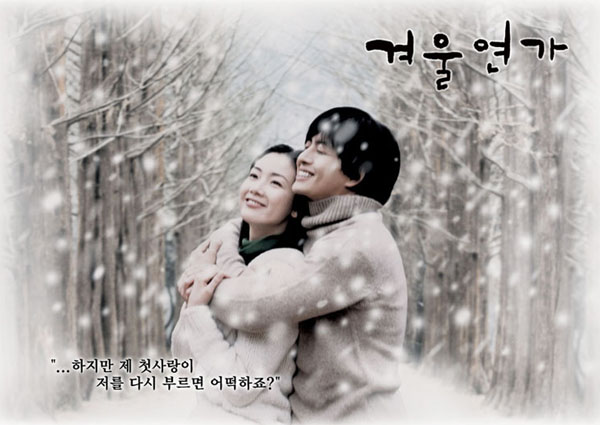
This Hallyu Wave TV hit drama has spawned countless tours to Nami Island and Yongpyeong Resort for local and foreign tourists seeking romance in the snow.
3. Snow-caped Temples and Pagodas
Ok - I know there are also temples and pagodas looking pretty in winter-time in China and Japan as well but I don't think they're featured as often and prominently by their tourist promotion boards. You can even download this winter wonderland scene for your desktop wallpaper by going to the KNTO website.
4. ROK soldiers fighting winter blues on duty
No holiday breaks for those on the front-line or the DMZ in the divided country which is still officially at war.
5 Pyongyang Naengmyeon
This cold noodle dish has become a popular summer dish but traditionally it was eaten in winter. According to Song Won-sup, "enthusiastic Pyongyang naengmyeon lovers point out that the middle of winter, not summer, is the right season to eat naengmyeon. The true taste, they say, can be appreciated when you finish a bowl of cold watery kimchi and meat stock and walk out on the street to have the cold wind blow in your face."
I just had a bowl of naengmyeon today and though there's no winter where I am, the air-con was on and I still don't get it. Wouldn't it be nicer to have a hot steaming bowl of samgyetang or kimchi tchigae in winter? I don't believe in fighting fire with fire or beating the cold with a cold broth.'
6 Winter Festivals and Hot Spring Tours
A Korean friend once told me what he liked most about his country was the smell of winter. No clue what he means but I guess you can have plenty of opportunity to smell the snowflakes outdoors with the many festivals held throughout the country in winter. Take your pick -from the Daewallyeong Snow Festival, Hwacheon Mountain Trout Festival, Inje Icefish Festival, Taebaeksan Snow Festival.
7. Fantastic Snow Flower Train
Enjoy the winter sights outdoors whilst travelling in cosy comfort aboard a train that passes through Taebaeksan or Deogyusan.
8. Pass-The-Briquettes - Community Service, Korean-style
Many Koreans sign up as volunteers to deliver coal briquettes to the homes of the less fortunate as early Christmas gifts. See earlier posting.
According to a recent survey for an on-line job portal, the most desirable gift amongst Koreans, both men and women, is clothing.
Second most popular gift for Korean males would be small electronic devices while your Korean girlfriend, wife, sister or ajumma prefer bling-bling. Whatever you decide, DON'T give books or CDs. Apparently these are the least favoured gifts in the eyes of Koreans this winter.
Of course, if you want to be original, you could give your loved one a Hostas plant called Korean Snow ( described as having " uniquely MISTED and STREAKED shiny green leaves with excellent substance". Click here for your last-minute or belated Xmas on-line shopping.
10. Welcome The First Sunrise in the New Year
Had a rotten year? Pray for better times alongside other Koreans who will brave the morning winter chills to greet the first sunrise of 2010.
sources:
http://www.history.army.mil/brochures/kw-stale/pic4.jpghttp://blog.asiahotels.com/wp-content/uploads/2008/12/temple-in-winter.jpg
http://joongangdaily.joins.com/article/view.asp?aid=2907555
http://asiaenglish.visitkorea.or.kr/ena/FU/FU_EN_15.jsp?cid=679201
http://world.kbs.co.kr/english/culturenlife/culturenlife_style_detail.htm?no=9146
http://www.koreatimes.co.kr/www/news/img/art/0812/081225_p9_welcome5.jpg
Wednesday, December 23, 2009
Top Ten Things To Do At Gyeongju - A Personal Must-Do List
Here's my LIST OF THINGS TO DO WHEN I REVISIT GYEONGJU
Not so easy to seek serenity in Seokguram if there are hundreds beside you with the same intent?
1. Catch the first rays of sunrise from Seokguram or at least from the top of Tohamsan. Soak in the peace and serenity in the grotto before the tourist hordes descend onto this place and finally, continue a meditative walk down to Bulguksa. Hopefully this helpful chart for sunrise times will be updated. The walk up is apparently steep and takes a few hours so I'm keeping my fingers crossed that I can wake up early enough to get a cab or better still, see if hermitage will allow visitors to stay overnight.

I'd like to ask the guide, for example, why these steps in Bulguksa are called the staircase of 48 desires.
2. Buy a proper guidebook or get an English-speaking guide to point out all the important features of Bulguksa. For earlier postings on Bulguksa, please click here and here.
3. Trek up the Namsan Skyway, low mountain south of Gyeongju which is chockful of Shilla relics ( tombs, statues, pavilions, pagodas, temples). The Lonely Planet promises “an exhilarating experience” exploring the various trails. source: http://www.sherwinvjones.com/gyeongjublog/wp-content/uploads/2009/11/Namsan-English-New-Map-150ppi.gif
The pond is dry and so is my inspiration?
4. Seek inspiration to compose sijo without benefit of soju at Poseokjeongji, the pond in a banquet garden where Shilla kings enjoyed conjuring up poems in contests while drinking. Poseokjeongji is the only banquet garden left in the world. Pity the water source has been cut off. Would've been fun to see how long the drinking cups take to float from one end to the other of the abalone-shaped stream.
5. Take a day-trip out to Yangdong Folk Village, a village which has existed since the Yi dynasty ( 15th and 16th centuries). Many traditional houses are still occupied by the descendants of the yangban ( aristocracy).
6. Stroll around Bomun Lake especially in spring when cherry trees which line the road around it are in full bloom. Also, have an outdoor picnic while watching traditional dances at the Bomun Outdoor Performance Theater near the TIC there.
Hopefully the museum displays also have explanatory notes in clear English
7. Visit the Shilla History Hall of Science a.k.a. Shilla Museum of Art and Science which has models of Seokguram and Cheomseongdae amongst other exhibits.
Many scenes for MBC's historical drama, Queen Seondeok were shot at the Shilla Millennium Park
8. Try some of the rides and watch the performances at the Shilla Millennium Park, an amusement park with a distinctively Shilla appearance although replicas of Constantinople, Baghdad, Changan (present-day Xian) are also featured. "The floating stage symbolizes the seas through which the four cities conducted trade and exchanges, while the land stage represents the Silk Road, the ancient over-land trading route." Also plan to enjoy the foot spa using hot spring water before cooling off with an ice-cream in the replica of Seokbinggo, the Shilla ice-room. Must also check out the cafeteria in the Emile Tower in the park which is built in the shape of the Emile Bell. For more info, click here.
9. Spend time contemplating in Oksan Seowon, a Confucian academy ( like the Doseon Seowon near Andong). The Lonely Planet describes it as having “sublime setting surrounded by shade trees and overlooking a stream with a waterfall and rock pools”.
10. Buy Hwangnam-bang – the popular local pastry filled with red-bean paste. Absolutely delicious when freshly baked. Great snack to chomp on while clambering over Namsan Skyway.
Tuesday, December 22, 2009
A Longer, Closer Look at Seokguram, Part 2
Seokbulsa ( Stone Buddha Temple) became known as Seokguram during the Japanese colonial period. More than 1200 years old, it has been listed as a World Cultural Heritage Site by UNESCO in 1995. National Treasure No. 24 of Korea is situated facing the East Sea on Tohamsan, Gyeongju.
This model from the Shilla Art and Science Museum reminds visitors that Seokguram isn't a temple built into a dug-out cave. It's actually a fully man-made construct built from granite upon a mountain-top. This type of grotto, called a "caitya" cave ( literally, a sanctuary) is unlike the "vihara" caves ( shelter for monks with a chapel) usually found in India and China.
The cut-away model here shows the rectangular antechamber which stands for earth. It leads to a short vestibule before the main domed chamber representing heaven. The mathematical precision of the structure suggests adherence to the architectural principles of the Golden Rectangle and La Porte d'Harmonie ( The Door of Harmony).
Thirty wedge-shaped rocks called "Dong-tul" arranged in a square shape are part of what makes Seokguram grotto special. The ingenious ventilation system, comprising five air passages above the shrine, have also contributed to the longevity of Seokguram. Ancient devotees could walk around the seated Buddha and pay closer attention to the fifteen panels of bodhisattvas, arhats and ancient Indian gods as well as ten miniatures of saints in the niches above.
Bas-relief carvings of two Vajrapanis, guardians of the temples make threatening gestures at the entrance into the rotunda.
The skill of Shilla stone masons is to be admired as they transform granite into facial creases, rippling muscles and flowing pants.
Buddha here is carved from a single granite block. There's some debate as to which Buddha he actually stands for - Seokgamoni or some other incarnation.
Buddha's lotus-shaped seat on a stone foundation is 1.34 meters tall. Lotus petals form the top and bottom sections while eight panels are sandwiched in between.
Buddha's hand positions ( mudras) signify his enlightenment. His right hand touches the earth; either this means him calling the earth to bear witness to his enlightenment. Check out the second video in the previous posting for a close-up shot which shows lines carved into his open palm.
The usnisa , which is the part of the head protruding on the top, symbolises his wisdom. The illusion of a halo is created by engraving a roundel decorated with lotus petals on the edge. This is another unique feature of Seokguram as other statues of Buddha tend to have the aureole attached to the head. Compare the photos above and below. A crystal or diamond could have been placed in the indentation in the middle of his forehead. Imagine the sunlight streaming into the gloom of the grotto and being reflected by a brilliant gem.
Play eye-spy with your little eye as you try to identify the three bodhisattvas, ten disciples, two Hindu gods in bas-relief AND ten statues of bodhisattvas , saints and faithful followers in the niches PLUS the Eleven-Faced Avalokitesvara standing right behind Buddha.
The ceiling is embellished with half moons and capped with a lotus flower. The design from top to bottom recalls the Jewel Net of Indra. According to Kang Woobang, " an extraordinary craftsman...wove a most excellent net which extends endlessly in all directions. On each knot of this net hung a jewel and the jewels mirrored, not only the adjacent jewels but also the multiple images reflected in them. This is a symbolic explanation of the ever-repeating mutual relationship between all things in the universe."
"One is all, and all is one". Yet doesn't the capstone remind one of a Yin-yang symbol or a divided Korea?
Architects, engineers, stone masons, sculptors, priests, government officials, mathematicians, astronomers and ordinary construction workers worked together to create this thing of scientific marvel, beauty, and spiritual inspiration. Pity they're no longer around - they could've taught the delegates at Copenhagen a thing or two about co-operation, harmony, and the bigger picture.
Sources:
http://www.sacred-destinations.com/south-korea/images/seokguram/resized/buddha-wc-gfdl.jpg
http://www.visitkorea.or.kr/enu/asis/wallpaper/0707/paper0707_03_1024.jpg
http://www.visitkorea.or.kr/enu/AK/AK_EN_1_6_4_5.jsp
http://english.cha.go.kr/
http://211.57.113.1/jsp/vr/cybertour_main.jsp?codeid=01010602&eflag=E
http://en.wikipedia.org/wiki/File:Korea-Gyeongju-Seokguram-12.jpg
http://en.wikipedia.org/wiki/File:Korea-Gyeongju-Silla_Art_and_Science_Museum-Seokguram_model-03.jpg
http://english.visitkorea.or.kr/cms/content_travelGoods/41/676641_images_4.jpg
http://english.visitkorea.or.kr/cms/resource/54/156354_image2_1.jpg
http://media-cdn.tripadvisor.com/media/photo-s/01/40/37/89/gate-of-seokguram-grotto.jpg
http://www.sacred-destinations.com/south-korea/images/bulguksa/resized/path-from-seokguram-cc-martinroell.jpg
http://koreanhistory.info/Shilla.htm
http://english.visitkorea.or.kr/enu/SI/SI_EN_3_1_1_1.jsp?cid=264260
http://en.wikipedia.org/wiki/Seokguram
http://english.triptokorea.com/english/UserFiles/Image/daily%20tour/Gyeongju/Seokgurm%20Grotto2.jpg
http://en.wikipedia.org/wiki/File:Korea-Gyeongju-Silla_Art_and_Science_Museum-Seokguram_model-02.jpg
http://farm4.static.flickr.com/3109/2831368349_559a774cc7.jpg
http://stone.buddhism.org/eng/seokguram/
http://www.buddhism.org/board/read.cgi?board=WhatsNew&y_number=26
Labels:
Gyeongju,
Korean Regions,
Korean travel,
Seokbulsa,
Seokguram,
Shilla
Monday, December 21, 2009
A YouTube Tour of Bulguksa and Seokguram
Here's an NHK production featuring Bulguksa and Seokguram in Gyeongju. The video clip is a bit too short for my liking especially the abrupt transition into the interior of Seokguram but there are some nice angled shots and close-ups. Better than amateur hand-held cam videos that give one a headache from all the reflective glass in the grotto and jerky camerawork.
Click here for another video on Seokguram and Bulguksa. It's older - judging from the older spelling i.e. Pulguksa and Sokkuram and the sound quality isn't good but it's even more enlightening.
A Longer, Closer Look at Seokguram, Part 1
1938 picture of Seokguram - my favourite pic of the grotto
After reading So Jae-gu’s essay, “Stone: The Mirror of Our Soul”, I’d like to revisit Seokguram Grotto and pay closer attention to this remarkable structure. During my first visit to the place, I was more taken by the freshly-fallen snow as it was my first experience of winter. Moreover, I hadn’t done my homework as a tourist.
The shuttle bus stops here and your short walk to Seokguram begins here
Instead of reading up on the place beforehand, I had mistakenly thought Seokguram was a shrine built into a natural cave like many of the Buddhist shrines and statues carved out of the softer rocks in India but I now realise the cave itself is a man-made grotto made up of hundreds of granite stones. What’s even more impressive is that they were joined, not by mortar but by stone rivets. That’s almost like a wooden house built without using nails.
From this distance, Seokguram looks like a tumuli lurking behind a shrine
Taking the shuttle bus from Bulguksa may be a convenient way to get to Seokguram but I hope I can do it the hard and long way the next time. By walking the full four kilometres up the steep and winding path up Tohamsan, I’d be able to appreciate better those labourers who had to haul blocks of granite up 750 meters above sea level to erect a hermitage for the Buddhist devotees of the past. Moreover, Tohamsan was regarded as a holy mount so to rush up to Seokguram in fifteen minutes or so by bus seems a little unsporting or even sacriligious.
Follow in the footsteps of ancient pilgrims and skip the shuttle bus up Tohamsan
Some experts believe the tiny hermitage was specially built as a private chapel for the Shilla royalty while ordinary pilgrims prayed in Bulguksa. Some think Kim Dae-Seong who oversaw the building of Bulguksa, wanted to dedicate the larger temple to his parents of his reincarnated life while Seokguram was intended as a memorial to the parents of his previous life. A third theory suggests it was meant as a supernatural or spiritual bastion to ward off possible invasions from Japan by positioning Buddha to face the east. Apparently it’s possible to glimpse the East Sea ( Sea of Japan) from inside the grotto.
Chapel, memorial or national defence?
Cut-away model of the man-made grotto
Even more unfortunate for Seokguram was the timing of its rediscovery. The Japanese colonial government actually decided to take it apart to repair it between 1913 and 1915. In doing so, the original arrangement of stones which allowed the grotto to “breathe” was disturbed. The use of cement and iron to cover the whole structure led to leaks and erosion as the natural ventilation of the cave was compromised.
Doesn't that crack in the capstone look like the ...?
Admire the immaculate paving on the floor
Only when proper studies of the structure of the grotto were made in the 1960s, the problems of high humidity and botched waterproofing could be resolved. Still, thorny issues remain unresolved – a wooden façade was added to the antechamber upset many for two reasons.
A necessary evil - to protect Buddha from tourists
The superstructure blocked off views of the sunrise, thus denying to future generations brilliant photo-opportunities and inspiration of enlightenment. Secondly, the passage of air into the grotto was cut off which again disrupted its natural ventilation. Another barrier- this time, a glass one, was put up between the Buddha and visitors. The glass wall was intended to protect Buddha from graffiti and vandals as well as to control the temperature within.
Study the models in the Shilla Science History Museum
to appreciate fully the achievement of the Shilla artisans
sources:
http://www.sacred-destinations.com/south-korea/images/seokguram/resized/buddha-wc-gfdl.jpg
http://www.visitkorea.or.kr/enu/asis/wallpaper/0707/paper0707_03_1024.jpg
http://www.visitkorea.or.kr/enu/AK/AK_EN_1_6_4_5.jsp
http://english.cha.go.kr/
http://211.57.113.1/jsp/vr/cybertour_main.jsp?codeid=01010602&eflag=E
http://en.wikipedia.org/wiki/File:Korea-Gyeongju-Seokguram-12.jpg
http://en.wikipedia.org/wiki/File:Korea-Gyeongju-Silla_Art_and_Science_Museum-Seokguram_model-03.jpg
http://english.visitkorea.or.kr/cms/content_travelGoods/41/676641_images_4.jpg
http://english.visitkorea.or.kr/cms/resource/54/156354_image2_1.jpg
http://media-cdn.tripadvisor.com/media/photo-s/01/40/37/89/gate-of-seokguram-grotto.jpg
http://www.sacred-destinations.com/south-korea/images/bulguksa/resized/path-from-seokguram-cc-martinroell.jpg
http://koreanhistory.info/Shilla.htm
http://english.visitkorea.or.kr/enu/SI/SI_EN_3_1_1_1.jsp?cid=264260
http://en.wikipedia.org/wiki/Seokguram
http://english.triptokorea.com/english/UserFiles/Image/daily%20tour/Gyeongju/Seokgurm%20Grotto2.jpg
http://en.wikipedia.org/wiki/File:Korea-Gyeongju-Silla_Art_and_Science_Museum-Seokguram_model-02.jpg
http://farm4.static.flickr.com/3109/2831368349_559a774cc7.jpg
http://stone.buddhism.org/eng/seokguram/
http://www.buddhism.org/board/read.cgi?board=WhatsNew&y_number=26
Labels:
Bulguksa,
Gyeongju,
Korean Regions,
Korean travel,
Seokguram,
Shilla
Sunday, December 20, 2009
Asadal's Troublesome Twins, Bulguksa Part 5
Two of the many treasures of Gyeongju
The master craftsman, Asadal whose job it was to oversee the construction of two pagodas within Bulguksa, must have regarded them as his own children. Considering the time and personal sacrifices he must have made to realise these national treasures, I’d like to think of them as his twins.
The pagodas take on an ethereal beauty at night
Whether or not they were a labour of love or just a job he did to put the bap in his bowl, whether or not Asadal grew to hate or love even more the pagodas after the suicide of his wife, no-one will ever know. But what is clear is that his pagodas have survived over 1200 years to keep the memory of his name alive.
Asadal's unidentical twins in Bulguksa's main courtyard
Lion on sentry duty in Dabotap
Apparently this was to acknowledge the greater nobility and compassion of Seokgamoni who chose to remain in the world of dust. It’s also unusual to find two pagodas on one temple site – due to an excess funds or virtue?
Shilla mastery of stone at its peak
These twin pagodas are both “outstanding examples of 8th century Unified Shilla architecture” and “skilfully balance the square, octagonal and circle in one design” but they’re not identical siblings. The first to be completed was National Treasure No. 20, Dabotap or the Pagoda of Many Treasures.
A hexagon on a circle above a square - Shilla stone masons play with geometry
It’s the more fanciful, decorative one that stands, 10.4 m tall, on a raised square with four staircases on each side. Each staircase has ten steps signifying ten great virtues ( paramitas). The lower four-sided levels become an octagonal roofed structure at the top. You can also check out its image on one face of the ten-won coin.
A great souvenir - Dabotap as a 3-D puzzle
In the 1920s, the Japanese took it apart and put it back together again – presumably looking for its many treasures but what they found remains a mystery.
The simple lines of Seokgatap are a striking contrast to Dabotap
Seokgatap or Sakyamuni Pagoda is a dramatic contrast to its sibling. Shorter at 8.2 m, its clean and unshowy outlines recall the wooden pagodas of China. Its three-storey design with eight stone lotus flowers at the top has been admired for its graceful appearance.
Who would've guessed this plain structure housed so many precious artefacts?
Restoration work during the 1960s revealed that this pagoda held a number of treasures such as a paper scroll sutra, printed between 706 and 751 A.D. and some gilt bronze boxes containing holy relics. For more on these treasures, check out this article from KBS.
While the ornateness of Dabotap reflects the complexity of the world, Seokgatap’s simplicity suggest a Yin-Yang balance of opposites. But others see them instead as “architectural manifestations of the Buddha’s simultaneous contemplation and detachment from the world”. Still sounds like Yin and Yang to me.
Click here for more of the Asadal legend.
source:
http://en.wikipedia.org/wiki/File:Korea-Gyeongju-Bulguksa-Dabotap_Pagoda-01.jpg
Labels:
Asadal,
Bulguksa,
Gyeongju,
Korean History,
Korean Regions,
Korean travel,
pagodas,
Shilla