
Ajumma's Journal
Tuesday, January 12, 2010

Monday, January 11, 2010
Isn't She Lovely?

If one could ascribe gender to temples, I'd call Geumsan-sa, a 'she'. There's something particularly feminine about her graceful curves and she does look particularly fetching dressed in the snowy-white mantle of winter, doesn't she?
On a more serious note, this temple is one of Korea's most important Buddhist temples. Believed to have been founded in 599 A.D. It developed into an important monastery in the 8th century and sadly like many other temples during the Japanese invasion in the 16th century, was razed to the ground and subsequently reconstructed in 1635. The Mireukjeon Hall, National Treasure No. 62, is the "only remaining three-storey traditional structure in Korea".
It's also probably one of the few buildings which has special names for each level. Daejabojeon (Hall of Great Mercy and Treasure) is situated on the first floor while the second floor is Yonghwajihoe (Gathering of Dragon and Beauty), and the third floor is called Mireuk-jeon (Hall of Maitreya). Pay attention as well to the supporting columns which get more and more slender, the higher they are.
A short drive from Jeonju, Geumsan-sa is also easily accessible by bus. For more information, click here.
source:
http://english.visitkorea.or.kr/enu/SI/SI_EN_3_6.jsp?cid=262538
http://www.orientalarchitecture.com/koreasouth/ruralchungbuk/geumsansa_gallery.php?p=geumsansa02.jpg

Sunday, January 10, 2010
Naejangsan "Revisited" In Winter

Pic credit:
Yonhap News
Friday, January 8, 2010
Sweeper's Bitter Labour Is Child's Innocent Delight Is Soldier's Masochistic Test Of Machismo?

Love or dread the snows of winter ?
Sorry for pointing out the banal obvious but
it's all a matter of context and perspective, isn't it?

Pic from Chosun Ilbo ( Jan 5, 2010)

Army special forces are in training on Mount Hwangbyeong in Gangwon Province on January 8, when the mercury fell below minus 20 degrees Celsius. ( Pic from Yonhap News, caption from KBS World )
I get it that someone's gotta shovel the snow while others can frolic in their winter wonderland but conducting snow drills in sub-zero temperatures is character or morale- building ???? Somebody please explain the rationale to me.
See related posting for autumn.
sources:
Thursday, January 7, 2010
‘Tis The Season For Heating Pads And Naeboks….

It’s too early to think of Christmas shopping for 2010 but now I know what could make good gifts for those who live in temperate countries like Korea. With all the recent reports about heavy snow and freezing temperatures in many parts of the country, giving someone such heating pads like the strawberry pair the child is holding, seem ideal and practical. Though this popular winter product may seem a little too cutesy and childish for some, I’d throw personal pride and vanity aside for the sake of warm hands. According to Yonhap, these portable and reusable heating pads can be popped into a microwave for 30 seconds to enjoy comforting heat which can last for three hours.

What I have bought from Korea before, though, is one of those electric heating pads which Koreans prefer to use to keep themselves warm in the cooler nights of spring or autumn before it makes economic sense to use the ondol. At that time, I hadn’t heard of Lee Kyo-soo’s doctoral thesis which speculates that electromagnetic waves from such appliances could cause stress and insomnia. Dad hasn’t been complaining but I guess I should check with his doctor about increased cortisol levels.

Another way Koreans are keeping warm this winter is by wearing naeboks ( learnt a new word today!). These are undergarments which have come back in fashion as comfort, environmental and financial concerns take priority over fear of looking old-fashioned and bulky and the convenience of indoor heating. More young people are open to the idea of wearing naebok, apparently, especially when the new styles look decidedly ungrand-motherly. It’s not clear though if they plan to wear red naebok for good luck for the coming Lunar New Year ( a quaint tradition in Korea, I’ve just learned as well).
Sources:
http://joongangdaily.joins.com/article/view.asp?aid=2914949
http://www.korea.net/news/news/newsView.asp?serial_no=20070222012&part=107&SearchDay=&page=51
http://www.korea.net/News/News/NewsView.asp?serial_no=20091214014
http://www.korea.net/News/News/newsView.asp?serial_no=20091214007
http://aidanroh.en.ecplaza.net/
Wednesday, January 6, 2010
A Provincial Park That Packs A Mighty Punch


For the first time in my life, I stood above “a sea of clouds” and in that other-worldly atmosphere, it was hard to believe that the city of Jeonju was only about an hour’s drive away.

I had the good fotune to visit this tiny park in Jeollakbuk-do one year with a tour group. It was one occasion when I meekly followed my tour guide and didn’t stray from the group as we all clambered into the cable car that took us near the summit, Macheondae ( 878m).

That’s not particularly high but I wasn’t the fittest of folks and I was already huffing and puffing on the stiff climb from the cable car station to the Geumgang Scenic Bridge ( “ a 50 m-long cable bridge stretched precariously between two rock pinnacles”, according to the Lonely Planet).

Anyway, our tour guide was only prepared to allow us to go as far as the end of the Bridge and discouraged us from venturing beyond. the Samseon Stairway ( “an incredibly steep and long steel cable stairway”).

If, however, you manage to reach the top, you can relish a “I’m the King of the World” moment as you may be able to see as far as Chuncheongnam-do. But you’re only entitled to that feeling if you didn’t cheat by using the cable car service and did the whole 1.7 km walk up from the main ticket office past Dongsim Rock to Macheondae.

A longer ( 2.2 km) and perhaps even more scenic route can be enjoyed if you start from the Yongmungol Ticket Office which is further up the road from the main tourist village here. You can take a break at Sinseon-am ( hermitage) and along the way, take a short detour to explore Yongmun-gul ( cave) before continuing onto Yongmungul 3 Sam-geo-ri and turning left onto the ridge to head towards Macheondae. You can follow the first route on the way back down. At least, that’s what I’d like to do, if I ever revisit this place which is also dubbed “ The Geumgang or Diamond Mountain of Honam Area” and also the “Sogeumgang of South Korea”.

http://theseoultimes.com/ST/?url=/ST/db/read.php?idx=5824
http://tour.chungnam.net/ctnt/engl/tour/02/tour.02.003.04.html
http://www.flickr.com/photos/theworldismycanvas/2417679762/
http://www.travelblog.org/Asia/South-Korea/Jeollabuk-do/Jinan/Maisan-Provincial-Park/blog-233258.html
http://english.visitkorea.or.kr/enu/asis/wallpaper/0710/paper0710_04_1024.jpg

http://asiaenglish.visitkorea.or.kr/ena/AC/AC_EN_4_8.jsp?cid=349790
http://asiaenglish.visitkorea.or.kr/ena/SI/SI_EN_3_6.jsp?cid=309527
Tuesday, January 5, 2010
Watching Sympathy for Lady Vengeance Again
Three cheers for Park Chan-wook who was recently voted Best Director of the year by his fellow film directors. Though the thumbs-up was primarily for his latest film, Thirst ( which I've yet to see), I'd like to think his body of work has something to do with the accolade as well.
Anyway, watched again his Sympathy for Lady Vengeance recently as I was in a nasty mood. But I think Park's handling of music in this movie and the wintry scenes are partly reason for my revisiting this compelling work.
Monday, January 4, 2010
Winter Wonderland or Winter of Our Discontent?
Those heading for Korea in the next few days, be forewarned. Public warnings about impending snowstorms have been issued to those living in Korea.

26,500 workers have been mobilized to sprinkle 800 tons of salt on the major roads in Seoul City. The snowplows have been working overtime as the season for shovelling snow has begun.

Unfortunately the snow has fallen too fast for the calcium chloride to do its job effectively of preventing the buildup of the ice. The snowfall apparently has hit record levels – Seoul has already experienced at least 25.7 cm of snow ( its heaviest in 41 years) and the temperature is expected to drop to minus 13 degrees Celcius by Wednesday, 6th January, 2010.

So drivers and pedestrians in Korea, do drive or tread carefully outdoors. Travellers, brace yourselves for long waits in airports or seaports as flights or ferry services are postponed or cancelled.

Hope you're wrapped up in cosy long-johns with the thickest of socks, sitting near a warm fire or lying on the ondol. All the best in weathering this ice-storm to all in Korea.

Sources:
http://world.kbs.co.kr/english/news/news_photo_detail.htm?No=14174
http://world.kbs.co.kr/english/news/news_photo_detail.htm?No=14162¤t_page=
http://joongangdaily.joins.com/article/view.asp?aid=2914782
http://joongangdaily.joins.com/article/view.asp?aid=2914631

26,500 workers have been mobilized to sprinkle 800 tons of salt on the major roads in Seoul City. The snowplows have been working overtime as the season for shovelling snow has begun.


So drivers and pedestrians in Korea, do drive or tread carefully outdoors. Travellers, brace yourselves for long waits in airports or seaports as flights or ferry services are postponed or cancelled.

Hope you're wrapped up in cosy long-johns with the thickest of socks, sitting near a warm fire or lying on the ondol. All the best in weathering this ice-storm to all in Korea.

Sources:
http://world.kbs.co.kr/english/news/news_photo_detail.htm?No=14174
http://world.kbs.co.kr/english/news/news_photo_detail.htm?No=14162¤t_page=
http://joongangdaily.joins.com/article/view.asp?aid=2914782
http://joongangdaily.joins.com/article/view.asp?aid=2914631
Sunday, January 3, 2010
Gamsa-hamnida to Some Denizens of Danyang

A VERY BIG THANK YOU to Mr Ko Jong-gyu at the Danyang Tourist Information Booth. We’d stopped by there to get more information and fortunately for us, it was the low season and you were spending the time in the most exemplary fashion by studying Japanese. We were lucky that you were free and offered to take us around in your car to show us some of the sights in Danyang.
Without you, we wouldn’t have seen the murals of Kuan Yin, the Goddess of Mercy in one temple, had our photo taken with the Three Peaks ( Dodamsambong ) and had our first taste of a memorable samgyetang ( stuffed chicken with ginseng). You were even so kind and patient as to drive me back to the restaurant the following day to retrieve a missing glove. Once again, Chong-mal Gamsa-hamnida!
Also want to thank a friendly elderly couple whom we met along the footpaths of the Daeseongsan, the park on the hill just behind Danyang town. Gamsa-hamnida for your very pleasant company as you let us join you on your daily exercise route round the hill and for pointing out to us various landmarks.
Friday, January 1, 2010
Happy New Year, Everyone!
Am cheating but couldn't find as yet any YouTube videos of the Bosingak Bell Tolling Ceremony at Jongno for the 2009/2010 New Year Celebrations - either people were late and missed the ringing of the bell because they were having too good a time at the bars or it was too noisy to capture the sound of the bell.
So here's the next best thing to welcome the new year - may it ring it all good things and times for everyone!
source:
http://www.youtube.com/watch?v=u9vLyN3H978&feature=related
Danyang Rocks! - Part 2
Rock lovers will enjoy Danyang in Chungcheongbuk-do ( not to be confused with Damyang of Jeollanam-do) for the following reasons:

1. Dodamsambong ( Three Peaks). This landmark, just north of Danyang, has been featured in many commercials and advertisements in Korea.

It’s smaller than expected and only romantic in the right circumstances – go early in the morning or late in the evening. It doesn’t seem so evocative in the harsh glare of daylight.

2. Seongmun ( Stone Gate) is 200 meters away from Dodamsambong and has been dubbed presumably by the Koreans themselves “ the most splendid stone gate in Asia”.

3. Prehistoric artifacts which were excavated in the region are on display in Suyanggae Prehistoric Remains Hall in the centre of Danyang town.

4. Sainam Rock is less accessible so it’s best to hop into a cab and head south of Danyang to see its ancient pines and pretty vertical profile.

5. South of Sainam Rock is Doraksan ( 964 m). Another handsome pine perched near the peak affords some dramatic photo opportunities.

6. Still further south is Mount Hwangjeong ( 959 m) which is home to vertical rock formations which are 20 -30 m high and form a splendid stone screen.

7. Danyang has three natural monuments – beside Gosu Cave, you can also give your imagination a workout by giving your own names to the stalactites and stalagmites in Ondal , Cheondong and Nodong Caves.

source:
http://www.land.go.kr/gTra.do?tra=enudestination&cid=3301
http://cache.virtualtourist.com/4262045-Namhan_River_and_bridge_at_Danyang_South_Korea-Tanyang.jpg
http://en.wikipedia.org/wiki/File:Korea-Danyang-Gosu_Cave_3184-07.JPG
http://www.travelblog.org/Asia/South-Korea/Seoul/blog-118713.html
http://images.travelpod.com/users/quebekwalouis/2.1221235320.gosu-donggulx-danyang.jpg

1. Dodamsambong ( Three Peaks). This landmark, just north of Danyang, has been featured in many commercials and advertisements in Korea.

It’s smaller than expected and only romantic in the right circumstances – go early in the morning or late in the evening. It doesn’t seem so evocative in the harsh glare of daylight.


3. Prehistoric artifacts which were excavated in the region are on display in Suyanggae Prehistoric Remains Hall in the centre of Danyang town.

source: http://www.emuseum.go.kr/eng/museum/museum_04_31.jsp
4. Sainam Rock is less accessible so it’s best to hop into a cab and head south of Danyang to see its ancient pines and pretty vertical profile.


source: http://www.land.go.kr/eng/images/tra/3301/223036_image2_1.jpg
6. Still further south is Mount Hwangjeong ( 959 m) which is home to vertical rock formations which are 20 -30 m high and form a splendid stone screen.


7. Danyang has three natural monuments – beside Gosu Cave, you can also give your imagination a workout by giving your own names to the stalactites and stalagmites in Ondal , Cheondong and Nodong Caves.

source:
http://www.land.go.kr/gTra.do?tra=enudestination&cid=3301
http://cache.virtualtourist.com/4262045-Namhan_River_and_bridge_at_Danyang_South_Korea-Tanyang.jpg

http://en.wikipedia.org/wiki/File:Korea-Danyang-Gosu_Cave_3184-07.JPG

http://www.travelblog.org/Asia/South-Korea/Seoul/blog-118713.html
http://images.travelpod.com/users/quebekwalouis/2.1221235320.gosu-donggulx-danyang.jpg

Danyang Rocks! - Part 1

Danyang is not to be confused with Damyang, the town famed for its bamboo groves. The former is one of the few tourist towns in Chuncheongbuk-do, probably the least blessed of the provinces in terms of the number of attractions. Aside from Suanbo, three national parks and towns like Cheonju and Danyang, there aren’t that many attractions compared to other provinces in the country.
So, it probably hasn’t been easy for the local tourist promotion board in Chungcheongbuk-do to persuade foreign visitors to spend time and won there. Seoulites, however, need no persuasion. In summer, they descend on this quiet and cool provincial town to escape the oppressive heat. In winter, the town regains its sleepy provincial demeanour and the uncrowded streets take on an added charm.

Sandwiched between Woraksan National Park and Sobaeksan National Park, this pleasant town beside the Chungju Lake ( Chungju-ho) offers thrills for adventure-seekers in the form of white-water rafting and paragliding. Photo enthusiasts can also get trigger-happy hunting down the Eight Beautiful Sights of Danyang ( Danyang Palgyeong).


Gosu-donggul, the main attraction of Danyang, usually attracts hordes of visitors during summer. According to my trusty Lonely Planet, during the peak tourist season, “you cannot move for all the tourists and it will take you an excruciating hour or more to walk around the system”. But when we visited this small provincial town in winter, it was almost as if we had the whole cave to ourselves.

As a result, it felt a little creepy at times so I had little reason to complain about the intrusive presence of the many steel staircases as they undermined the unearthly atmosphere of this very large limestone cave system. It was a good workout as we followed the well-posted 1300 m-long trail from one impressive formation of stalactites and stalagmites to another. Entrance fees were 3000 won in 2002.
source of pics:
http://cache.virtualtourist.com/4262045-Namhan_River_and_bridge_at_Danyang_South_Korea-Tanyang.jpg
http://en.wikipedia.org/wiki/File:Korea-Danyang-Gosu_Cave_3184-07.JPG
http://www.travelblog.org/Asia/South-Korea/Seoul/blog-118713.html
http://images.travelpod.com/users/quebekwalouis/2.1221235320.gosu-donggulx-danyang.jpg
Some Wishful Thinking for 2010
News From Korea I Don’t Want To Hear or Read About In 2010:

1. Suicides ( whether they concern former Presidents, entertainment celebrities or ordinary citizens)

2. Fire Disasters like the one that destroyed Hyangilam

3 . Street vendors given a hard time by Seoul Metropolitan officials who think the city streets would be better off without the street vendors. Click here for a fuller story


source: http://www.nytimes.com/2009/05/25/world/asia/25iht-korea.html
1. Suicides ( whether they concern former Presidents, entertainment celebrities or ordinary citizens)


source: http://www.korea.net/cheditor40_asp/cheditor/attach/20083517302333715.jpg
3 . Street vendors given a hard time by Seoul Metropolitan officials who think the city streets would be better off without the street vendors. Click here for a fuller story

source: http://blog.asiahotels.com/wp-content/uploads/2009/07/pojangmacha.jpg
4 . Entertainers given the boot simply because of cyberspace persecution. Click here for a fuller story.

Have I missed anything else?

4 . Entertainers given the boot simply because of cyberspace persecution. Click here for a fuller story.

Have I missed anything else?
Gamsa- Hamnida to Some Gentlefolk of Gyeongju
To Certain Gentlefolk of Gyeongju,
First of all, thank you to our hosts in Sarangchae ( 054-773 4868) for maintaining a traditional-style house and renting out rooms for tourists.

My friend and I had flown into Ulsan from Jeju, just missed the shuttle bus by a minute or so (a warning to fellow travellers not to be tardy) and so arrived in Gyeongju late in the evening. So it was a relief to plonk ourselves into the cosy beds in your guesthouse and bask in the charming atmosphere of a bygone time.

At the same time, you thoughtfully provided your guests with modern amenities such as free Internet access and a kitchen in which we could fix ourselves a quick supper of instant noodles.

Unfortunately traditional style living dictates that the bathroom and toilet facilities are located away from the sleeping quarters and we weren’t prepared to continue to trudge the distance in the chilly early winter evening. So in the end, I’m sorry to admit that we decided to change to another place with zero physical charm but all the practical convenience of an attached bathroom.

But now it’s my turn to say Mian-hamnida to Mr Kwon Young-joung, the friendly proprietor of Hanjin-jang Yeogwan (tel 771 4096). The plainness and unmemorable appearance of his yeogwan is offset by the warm reception and farewell we got at his place – Gansa-hamnida to you, Mr Kwon, for the lovely chopstick tokens you presented us when we said goodbye to you. Sorry we missed your home-made entertainment ( do you really have performing scorpions?) but thank you for placing the reproduction of the Emile Bell at your reception counter. If I hadn’t had a chance to fall in love with its sound, I wouldn’t have bought my own replica at the Bulguksa souvenir shop.
Finally, CHONG-MAL GAMSA-HAMNIDA to a kind anonymous ajumma who helped us when we got lost somewhere on the streets of Gyeongju city. We stopped you, a complete stranger, simply hoping that you would point out the right direction to take to get back to our yeogwan. Instead you signalled that we should follow you into your car. We were completely floored when you actually drove us back right to the doorstep of Hanjin-jang. Maybe your kindness was prompted by the fact that you reckoned it was less convenient to tell us where to go ( given our very scanty Korean and your limited English) or perhaps it was out of national pride that Koreans take good care of foreign visitors. I’d like to think it was one of the many spontaneous acts of hospitality that I’ve experienced with your fellow citizens as you were so matter-of-fact about the whole matter.
Yours gratefully,
A non-Korean ajumma
sources:
http://english.visitkorea.or.kr/enu/SI/SI_EN_3_1_1_1.jsp?cid=398684&nearBy=site
http://www.flickr.com/photos/globalismpictures/1534962452/
Monday, December 28, 2009
Who Beat 2PM and Super Junior In Weekly Album Sales?
Answer: Lucid Fall
Who?
His real name is Jo Yun-seok. According to the KBS report, "A graduate of Seoul National University’s chemical engineering department, Lucid Fall has studied in Switzerland for his doctorate degree in bioengineering. His dissertation was so innovative that it was published in the inaugural issue of the new academic journal 'Nature Chemistry'. " Now, he's made a big switch from a life in academia as a researcher on nanotechnology to the unpredictable life of a singer and composer. For more on his debut in the music scene, click here and for the full story about his brave decision to change careers, click here.
Wow. Talk about a modern-day Renaissance man.

Here's another snippet from the same report: "Ten thousand copies of Lucid Fall’s fourth album were sold out in just three days". Now, that's successful marketing or is it a case of great music selling itself?
I couldn't find any decent video of the beautiful "Spring Snow" by the man himself but here's his composition delivered by the beautiful Park Ji-yeon.
Am waiting for those who attended his “Silent Night Nylon Night 2009” concert this December in Busan,Seoul and Daegu to post their recordings on youtube. Meanwhile, here's wishing you, Lucid Fall, all the very best for your inspiring choice and new career path.
source:
http://www.youtube.com/watch?v=eN-K_Mj7-I8
http://world.kbs.co.kr/english/entertainment/enter_chart_detail.htm?No=11058
http://www.last.fm/music/Lucid+Fall
Sunday, December 27, 2009
Where Will You Welcome The First Sunrise of 2010?

Those who wish for an early start to the New Year could go instead to Homigot in Pohang as 2010 is the Year of the Tiger according to the Chinese calendar. Homigot is dubbed the “Tiger’s Tail” as it’s located at the tip of the Korean Peninsula which has been compared to a tiger standing on its hind legs. Pohang’s also celebrating its 60th anniversary as a municipal city and a special steel sculpture in the form of a tiger will be revealed at midnight on 31 December, 2009.
If I were in Korea on 31 December 2009, I’d like to find my way to on top of Mount Geumo near Yeosu to the place where Hyangilam stood until very recently when it was a victim of a fire. Sadly, Hyangilam (“the temple facing the sun” directly translated ) no longer exists as one of the top four meditation sites in the country.
Why go to a place which is probably still reeking of ashes? If you’re the kind who prefers a little more solitude than noisy merriment, there’s a good chance you wouldn’t have any crowds to contend with up on Geumosan, for starters. Second, the many camellia bushes should still be there, as would the great views of the South Sea. Finally and above all, I can’t think of a better place symbolically to let go of past griefs and pray for healing and restoration in the new year.
So if you are an experienced hiker with a strong pair of legs and a strong heart, and are not deterred by the recent tragedy, you can expect to greet the sun at 7:36 am there. Just don’t forget to send me some photos of the place and say a little prayer for all of us. Thanks in advance and a Happy New Year to you!
source:
http://festival.ipohang.org
http://www.koreatimes.co.kr/www/news/art/2009/10/203_36737.html
Which is the most popular song in the noraebangs for 2009?
Which K-pop song is the most often sung in the noraebangs across South Korea? Turns out it’s not just the No.1 most played song for 2009 but also for 2008. Lee Eun-mi’s “I Have A Love” also has the distinction of remaining in the top 100 of the Mnet Music charts for an unprecedented 64 weeks straight.
So what explains its staying power and incredible popularity? It’s not an easy song to sing but obviously it resonates with many Koreans, whether or not they have unspoken loves. Put it down to the intense vocal performance by the Korean diva ( whether she turns on the glamour or not), a strong sentimental streak among Koreans plus the fact that it was reputed to be the late Choi Jin-shil’s favourite song.
Source:
http://world.kbs.co.kr/english/entertainment/enter_chart_detail.htm?No=11052
Thursday, December 24, 2009
Top Ten Quintessential "Winter in Korea" Photos
Where else but in Korea can one witness such sights during winter? Here is my top ten list of quintessential "winter in Korea" photos.
1 Precious ingredients cooking outdoors in winter
Where else but in Korea can you see these plain earthernware pots containing kimchi, gochujang or other sauces which are fermenting nicely in frigid temperatures?

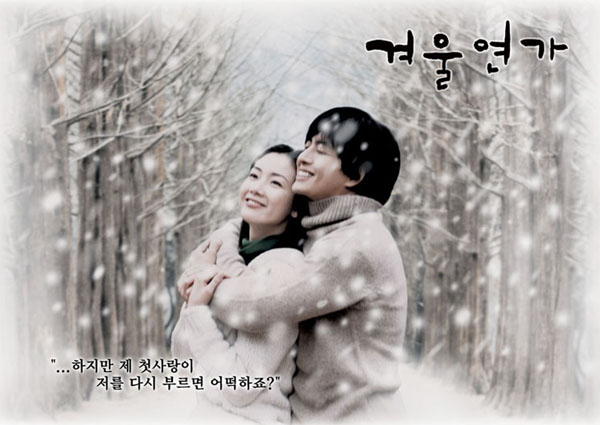
This Hallyu Wave TV hit drama has spawned countless tours to Nami Island and Yongpyeong Resort for local and foreign tourists seeking romance in the snow.

3. Snow-caped Temples and Pagodas
Ok - I know there are also temples and pagodas looking pretty in winter-time in China and Japan as well but I don't think they're featured as often and prominently by their tourist promotion boards. You can even download this winter wonderland scene for your desktop wallpaper by going to the KNTO website.

4. ROK soldiers fighting winter blues on duty
No holiday breaks for those on the front-line or the DMZ in the divided country which is still officially at war.


5 Pyongyang Naengmyeon
This cold noodle dish has become a popular summer dish but traditionally it was eaten in winter. According to Song Won-sup, "enthusiastic Pyongyang naengmyeon lovers point out that the middle of winter, not summer, is the right season to eat naengmyeon. The true taste, they say, can be appreciated when you finish a bowl of cold watery kimchi and meat stock and walk out on the street to have the cold wind blow in your face."

6 Winter Festivals and Hot Spring Tours
A Korean friend once told me what he liked most about his country was the smell of winter. No clue what he means but I guess you can have plenty of opportunity to smell the snowflakes outdoors with the many festivals held throughout the country in winter. Take your pick -from the Daewallyeong Snow Festival, Hwacheon Mountain Trout Festival, Inje Icefish Festival, Taebaeksan Snow Festival.

7. Fantastic Snow Flower Train

8. Pass-The-Briquettes - Community Service, Korean-style

Many Koreans sign up as volunteers to deliver coal briquettes to the homes of the less fortunate as early Christmas gifts. See earlier posting.
According to a recent survey for an on-line job portal, the most desirable gift amongst Koreans, both men and women, is clothing.

Second most popular gift for Korean males would be small electronic devices while your Korean girlfriend, wife, sister or ajumma prefer bling-bling. Whatever you decide, DON'T give books or CDs. Apparently these are the least favoured gifts in the eyes of Koreans this winter.

Of course, if you want to be original, you could give your loved one a Hostas plant called Korean Snow ( described as having " uniquely MISTED and STREAKED shiny green leaves with excellent substance". Click here for your last-minute or belated Xmas on-line shopping.
10. Welcome The First Sunrise in the New Year
Had a rotten year? Pray for better times alongside other Koreans who will brave the morning winter chills to greet the first sunrise of 2010.

sources:
http://www.history.army.mil/brochures/kw-stale/pic4.jpg

http://blog.asiahotels.com/wp-content/uploads/2008/12/temple-in-winter.jpg

http://joongangdaily.joins.com/article/view.asp?aid=2907555
http://asiaenglish.visitkorea.or.kr/ena/FU/FU_EN_15.jsp?cid=679201
http://world.kbs.co.kr/english/culturenlife/culturenlife_style_detail.htm?no=9146
http://www.koreatimes.co.kr/www/news/img/art/0812/081225_p9_welcome5.jpg
