45 –year-old Seo was one of 58,000 “hourly lecturers” or part-time employees responsible for 55% of all the lectures conducted in universities across South Korea. (Another source puts the total number of these part-time lecturers at 85,000.) As his status was simply a “miscellaneous daily worker”, he could only expect to be paid between 30,000 and 40,000 won per hour with no fringe benefits like insurance. His monthly income was no more than 1.4 million won.
Although he had worked for 10 years in the same university, he still couldn’t get a full-time position. He had worked his way up the academic ladder to get his doctorate only to find himself acting as a part-time lecturer and ghostwriter. Seo said: “I wrote about 25 papers with this professor, one doctoral dissertation for the professor’s student, one Korea Research Foundation paper, four master’s theses, and four Korea Research Foundation presentation papers….. For all of the roughly 54 papers we wrote together, I wrote the papers and this professor just put his name on them.”
He also revealed, “I was asked to pay 60 million won by a university in South Jeolla two years ago and 100 million won by a university in Gyeonggi two months ago if I wanted to become a full-time professor.” Over eight years, he applied for a professorship and was rejected 20 times. When the years of frustration turned into despair, he wrote a five-page suicide note last Tuesday to his wife, who worked more than 10 hours a day at restaurant to help support their two children.
According to The Korea Times, Kim Dong-ay, 61, a former full-time lecturer at a Seoul university and an executive of a temporary educators' union said, ``More than 70,000 part-time lecturers nationwide are being exploited without official labor contracts. Most of them earn less then 10 million won ($10,000) a year.'' They teach 40 % of classes at universities. Since their status was downgraded 34 years ago under the Park Chung-hee regime, they have been unable to enjoy basic benefits such as pensions and medical insurance.'' Since 2000, at least SIX part-time lecturers have killed themselves, driven to despair by the injustices and corruption in the education system.
Although the Supreme Court ruled in April 2007 that part-time lecturers must be accorded the same status as full-time professors, there has been little change as no-one dares to report instances of discrimination as the threat of summary dismissals is a real concern. To make matters worse, the Irregular Worker Protection Law, enacted in July 2007 stipulated that a "part-time lecturer is not part of the list of jobs that should be switched to permanent positions after two years of employment because they are regarded as a special group." Elsewhere it was reported that Education Ministry statistics showed that more than 1,000 part-time lecturers at 112 universities nationwide were dismissed in the autumn of 2009, seemingly as a result of the Irregular Worker Law that requires employers to move irregular workers into regular positions after two years.
What I've culled from articles on the Net and summarised above is nothing new to many though it's something that I've only become aware of more recently. Perhaps it also explains in part why Seoul National University, the top tertiary institution in the country was only ranked 51st in the world by the Times Higher Education -QS World Universities Rankings for 2007. I can only hope that the situation will improve sooner than later, for part-time lecturers in Korea, for their sakes as well as for the sake of the students and the whole country.
Sources:
http://joongangdaily.joins.com/article/view.asp?aid=2921114
http://www.koreatimes.co.kr/www/news/nation/2010/05/117_66639.html
http://english.hani.co.kr/arti/english_edition/e_national/422981.html
http://english.donga.com/srv/service.php3?biid=2010052805728
http://joongangdaily.joins.com/article/view.asp?aid=2921146
http://www.koreatimes.co.kr/www/news/nation/2008/03/113_21620.html
http://www.amrc.org.hk/node/1256/print
http://globalvoicesonline.org/2008/03/15/korea-part-time-lecturers-and-suicide/
http://stip.or.kr/bbs/board.php?bo_table=Solidarity&wr_id=10
http://english.hani.co.kr/arti/english_edition/e_opinion/284754.html
http://www.academicleadership.org/emprical_research/606.shtml
http://www.koreatimes.co.kr/www/news/nation/2010/05/113_65182.html

Ajumma's Journal
Monday, May 31, 2010

Sunday, May 23, 2010
How To Break A Watermelon With A Shuttlecock
Still on badminton but totally trivial this time. Here are two videos featuring the Korean pair who won an Olympic Gold medal for mixed doubles in the Beijing 2008 Summer Games. Lee Hyojung and Lee Yongdae appear here on an Infinity Challenge TV show ( 2008). Did anybody record the speed of Lee's impressive smash when he slammed the shuttlecock into the watermelon? Flying shuttlecocks have been known to exceed 200km/hr.
Watermelon Cracked by Shuttlecock - Watch more Funny Videos
 Caption from China's People Daily: Lee Hyojung and Lee Yongdae of South Korea stand on podium during victory ceremony of mixed doubles gold medal match of the Beijing 2008 Olympic Games badminton event in Beijing, China, Aug. 17, 2008. Lee Hyojung and Lee Yongdae of South Korea won the match over Widianto Nova and Liliyana of Indonesia and got the gold medal.
source:
http://www.break.com/index/watermelon-cracked-by-shuttlecock.html
http://www.youtube.com/watch?v=QGzXiHPn3vE
http://english.peopledaily.com.cn/90001/90779/94835/6478399.html
Watermelon Cracked by Shuttlecock - Watch more Funny Videos

source:
http://www.break.com/index/watermelon-cracked-by-shuttlecock.html
http://www.youtube.com/watch?v=QGzXiHPn3vE
http://english.peopledaily.com.cn/90001/90779/94835/6478399.html
Friday, May 21, 2010
Lotus Lanterns
Buddha's birthday is celebrated in Korea this year on May 21st. The main image associated with this occasion would be lotus lanterns. Koreans have been lighting these since the Shilla Dynasty (B.C. 57-935 A.D.). What is surprising is that lotus lanterns don't seem to be so prominent in other Asian countries where there are Buddhist devotees even though the flower has long been a symbol of purity, the aspiration to rise above the dirt and dust of worldly cares or above "the mud of delusion" and enlightenment. One source claims that "The lotus lanterns are unique to Korean culture; they cannot be found in Chinese or Japanese Buddhism." What about in India?
According to Ven. Hye-Kyeong, "Athough the blossom remains clean, it doesn't force its surroundings to get cleaner. Buddha also teaches that everything has a purpose - even dirt. If there is no dirt, there is no need for lotus blossoms as well." Hmmm.
All I know is it's not easy work making these lanterns. Each paper petal and leaf is stuck by hand onto a wire frame with sticky starch and usually each temple or hermitage is decked out with hundreds or even thousands of these each year. I'm guessing from one visit in spring that an army of ajumma volunteers prepare the 연등 or yeondeung or lotus lantern weeks before the celebrations begin. Question is: what happens to them afterwards? Are they relegated to some bonfire as a some symbolic gesture or are they recycled or used again the following year? Surely Buddha wouldn't object to the latter in these environmentally-critical times?

http://www.buddhistchannel.tv/index.php?id=45,6287,0,0,1,0
http://www.koreatimes.co.kr/www/news/art/2010/05/203_65815.html
According to Ven. Hye-Kyeong, "Athough the blossom remains clean, it doesn't force its surroundings to get cleaner. Buddha also teaches that everything has a purpose - even dirt. If there is no dirt, there is no need for lotus blossoms as well." Hmmm.
All I know is it's not easy work making these lanterns. Each paper petal and leaf is stuck by hand onto a wire frame with sticky starch and usually each temple or hermitage is decked out with hundreds or even thousands of these each year. I'm guessing from one visit in spring that an army of ajumma volunteers prepare the 연등 or yeondeung or lotus lantern weeks before the celebrations begin. Question is: what happens to them afterwards? Are they relegated to some bonfire as a some symbolic gesture or are they recycled or used again the following year? Surely Buddha wouldn't object to the latter in these environmentally-critical times?

Love this photo of lanterns at Jogyesa. Credit: Korea Times photo by Shim Hyun-chul
sources:
http://www.buddhistchannel.tv/index.php?id=45,6287,0,0,1,0
http://www.koreatimes.co.kr/www/news/art/2010/05/203_65815.html
Monday, May 17, 2010
Masan Ladies Make History
It's such a shame. I've checked a couple of Korean on-line newspapers ( in English) but none have featured the recent triumph of the Korean women's badminton team in the recent Uber Cup Championships held in Kuala Lumpur, Malaysia.
Sports in Korea seems to be dominated by football, golf, baseball and ice-skating ( not necessarily in that order) and to my surprise, there's not even a mention of the achievements of the ladies who hail from Masan and how they've beaten the Chinese team in the badminton finals in this prestigious tournament in the world of badminton.
Let me quote the head coach, Kim Jong Soo to sum up this milestone: "This is a historic day for Korean badminton. We reached the finals five times before and we were beaten in all five by China. But today it was a different story, we were not the second fiddle.We've had enough of losing to the Chinese. The players were determined to break the jinx and we did it in Kuala Lumpur."
Just hope there'll be some welcoming committee for the ladies when they get back to Korea. It's a pity that badminton isn't such a glamorous sport as ice-skating but then again, who ever said that life was fair?
Here are the results:
Bae Seung Hee beat Wang Yihan 23-21, 21-11;
Lee Hyo Jung/Kim Min Jung beat Ma Jin/Wang Xiaoli 18-21, 21-12, 21-15;
Sung Ji Hyun lost to Wang Xin 14-21, 21-16, 7-21;
Lee Kyung Won/Ha Jung Eun beat Du Jing/Yu Yang 19-21, 21-14, 21-19.
sources:
http://badmintonlife.com/2010/thomas-and-uber-cup-2010-korea-stuns-china-to-win-uber-cup/
http://www.badzine.info/index.php/news/international/2508-fast-facts-about-the-2010-uber-cup.html
http://www.mysinchew.com/node/39072
http://sports.globaltimes.cn/moresports/2010-05/532085.html
http://www.youtube.com/watch?v=JXyA1mgbJLM&feature=related
Monday, May 3, 2010
Congratulations to The Winners of Blog Korea! Visit Korea!
Congratulations to the three winners of the Blog Korea! Visit Korea! competition. Strange though that the results are posted in the KNTO website and not on the metablog for VANK.
Click here for the winners. Drumroll, please.
BTW, am taking a two week break as I've some pressing deadlines to meet.
Source:
http://english.visitkorea.or.kr/enu/FU/FU_EN_15.jsp?cid=1011946
Click here for the winners. Drumroll, please.
BTW, am taking a two week break as I've some pressing deadlines to meet.
Source:
http://english.visitkorea.or.kr/enu/FU/FU_EN_15.jsp?cid=1011946
Have Squid, Will Gut
One of the stops made on a day tour I joined in Jeju was a seafood eatery of sorts. The dining area was tucked within some tents and I wasn't feeling too adventurous, having had a bad encounter with seafood the day before. So I was content to let the Korean tourists enjoy my share of the raw seafood while I watched the ajummas at work.
It was a great opportunity to have a free lesson in how to cut and clean squid. Spent at least a quarter of an hour watching them wield their knives so deftly. Too bad I don't ever cook squid in my own kitchen.
The following videos posted by others were taken in other parts of Korea but I think the technique is the same.
Thanks to ffej4321 for posting this on YouTube.
Thanks to lisaruck10 for this one!
sources:
http://www.youtube.com/watch?v=xVCkXzHW364&feature=related
http://www.youtube.com/watch?v=36L_2Gi-sdI&feature=related
Sunday, May 2, 2010
Think Twice Before You Touch That Shellfish!
Wasn't going to write about this embarrassing episode when I did a tour of half the public toilets on Jeju the day after I had some seafood stew for dinner in a restaurant on the island. But after coming across a recent headline from the JoongAng Daily entitled "Toxin In Shellfish Is Spreading" ( date: 30th April, 2010), I've changed my mind. Don't want your vacation in Korea to be spoilt as mine almost was.

Those who love their haemultang ( seafood soup), be careful. According to the news report, the heavy rainfalls this spring have caused toxin levels to rise in some shellfish. Looks like the farmers aren't the only ones who are facing hard times this spring, no thanks to the unseasonable conditions. ( see previous posting).
Extracted from the JoongAng Daily:
Because of the spread of paralytic shellfish poisoning, or PSP, harvesting bans have been put on many coastal areas, starting with Jinhae Bay, in Jinhae, South Gyeongsang on March 29. In less than one month, PSP spread north, crossing over Busan and onto Ulsan in the eastern coast, and then to the western coast. Experts say that this year’s poison levels are the highest ever for some areas, due to excessive rain......When humans digest PSP, it can cause nausea, vomiting, diarrhea, a choking feeling and can even be fatal in extreme cases....the most common symptoms are “vomiting, which leads to difficulty breathing, and a muscle paralysis."
Fortunately for me, I only suffered a mild case of food poisoning (must have eaten the wrong mussel or something as my travel companion had no problems and we shared the same dish) and didn't experience any of the symptoms described above. But I have sworn off seafood, more or less, whenever I was on holiday.
I don't want to sound alarmist but just note in case your mouth starts swelling or a wave of nausea is sweeping over you after consuming any kind of shellfish.
It's been suggested that you:
1. stick your finger down your throat to induce vomitting
2. drink lots of salt water
3. take Syrup of Ipecac ( if the finger-down-the-throat method doesn't get you retching quickly)
4. go straight to the hospital even though you've followed steps 1 to 3
sources:
http://joongangdaily.joins.com/article/view.asp?aid=2919879
http://seagrant.uaf.edu/features/PSP/PSP.pdf
http://samedi.livejournal.com/326273.html

My seafood stew didn't look as good as this though.
Those who love their haemultang ( seafood soup), be careful. According to the news report, the heavy rainfalls this spring have caused toxin levels to rise in some shellfish. Looks like the farmers aren't the only ones who are facing hard times this spring, no thanks to the unseasonable conditions. ( see previous posting).
Extracted from the JoongAng Daily:
Because of the spread of paralytic shellfish poisoning, or PSP, harvesting bans have been put on many coastal areas, starting with Jinhae Bay, in Jinhae, South Gyeongsang on March 29. In less than one month, PSP spread north, crossing over Busan and onto Ulsan in the eastern coast, and then to the western coast. Experts say that this year’s poison levels are the highest ever for some areas, due to excessive rain......When humans digest PSP, it can cause nausea, vomiting, diarrhea, a choking feeling and can even be fatal in extreme cases....the most common symptoms are “vomiting, which leads to difficulty breathing, and a muscle paralysis."
Fortunately for me, I only suffered a mild case of food poisoning (must have eaten the wrong mussel or something as my travel companion had no problems and we shared the same dish) and didn't experience any of the symptoms described above. But I have sworn off seafood, more or less, whenever I was on holiday.
I don't want to sound alarmist but just note in case your mouth starts swelling or a wave of nausea is sweeping over you after consuming any kind of shellfish.
It's been suggested that you:
1. stick your finger down your throat to induce vomitting
2. drink lots of salt water
3. take Syrup of Ipecac ( if the finger-down-the-throat method doesn't get you retching quickly)
4. go straight to the hospital even though you've followed steps 1 to 3
sources:
http://joongangdaily.joins.com/article/view.asp?aid=2919879
http://seagrant.uaf.edu/features/PSP/PSP.pdf
http://samedi.livejournal.com/326273.html
Saturday, May 1, 2010
Cold Snap Bites Back
Are these disturbing signs of possible global warming?


sources:
http://joongangdaily.joins.com/article/view.asp?aid=2919880
http://joongangdaily.joins.com/article/view.asp?aid=2919810

A sorry sight and a farmer's nightmare - watermelons spoilt by the cold

Plastic sheets can't protect corn fields adequately

As temperatures plunge, food prices soar
sources:
http://joongangdaily.joins.com/article/view.asp?aid=2919880
http://joongangdaily.joins.com/article/view.asp?aid=2919810
Friday, April 30, 2010
From Hola To Olle in Jeju

Seo or Suh Myung Sook, director of Jeju Olle ( pic by Ahn Sang-soo)
It all began when Suh Myung-sook said Hello or maybe it was Hola to Henney from Britain somewhere along the El Camino de Santiago. After 23 years working in the media, Suh had decided to quit her post as editor-in-chief of OhmyNews and take time off in Spain. The chance meeting with a fellow walker from Britain and the positive experiences on the long walk prompted her to develop her own pilgrimage trail back home.

Ms Suh decided that Jeju had the most potential and it wasn't long before she hit upon the name "Jeju Olle" for her project as the word "olle" in the Jeju dialect refers to "the narrow path between the street and one's doorstep".

If I were a documentary film-maker, I'd trace the story of how Ms Suh's dream was realised as she set up her trail exploration team, persuaded the people of Jeju ( skeptical landowners in particular) to agree to letting strangers on their land, and enlisted the manpower of soldiers training in a local camp.
Unfortunately for me, the Olle trails weren't opened yet when I visited Jeju but since the first trail opened in September, 2007, at least 14 other trails have been established mostly along the coastline of Jeju and more than 100,000 people have been able to enjoy the fruits of Ms Suh's endeavours. Some have voiced concerns that the popularity of the trails may have an adverse effect on the local ecology but I can't comment on that. All I can say is the more I see the pics of the trails, the more I wish I was in Jeju right this minute. I am so ready to hit those trails - well, not physically ready but mentally and emotionally -yeah!
Jeju can often seem too touristy with its resorts, amusement parks and various galleries and museums. But with its Olles, visitors in search of the natural face of Jeju should be able to find plenty of opportunities to commune with nature. I know I will,
Click here or here for Routes 1 to 13 and click here for Route 14.
Download guidebook on Jeju Olle here.
For examples, see below:
Route 1 Admire views of Seongsan Ilchulbong Peak as you climb an oreum, pass through salt fields and end up in Gwangchigi Beach.

Route No 4 Start from Pyoseon Beach Resort and make your way up Mang Oreum through a pine forest. Pass an old beacon mound before you reach Namwon Port and Keuneong Promenade.

Route No. 6 -Take a ride across the Soesokkak Estuary on a Te-u ( traditional boat) before visiting the Lee Jung Seop Gallery and the eco park around the Cheonjiyeon Falls. The walk ends at Oedolgae Seaside Promenade.
sources:
http://english.visitkorea.or.kr/enu/SI/SI_EN_3_6.jsp?cid=726174
http://www.koreatimes.co.kr/www/news/art/2010/01/144_52041.html
http://english.ohmynews.com/articleview/article_view.asp?at_code=437591
http://www.jejuolle.org/main/main.jsp
http://www.ssahn.com/archives/2008_03.htm
Thursday, April 29, 2010
Jeju, Samseonghyeol: Begin At The Beginning
The first stopover in Jeju for many tourists in guided tours may well be Yongduam Rock. But my friend and I thought we’d start with Samseonghyeol, which was close to the Hanmi-jang Yeogwan in the old section of Jeju town. Click here for a video of the place.

In the nearby museum, it had been mildly interesting to watch the animated video which recounted the legend of Tamna, the settlement we know now as Jeju. Three demi-gods apparently emerged from three holes to found Tamna. Subsequently, Go or Ko, Yang and Bu, originally hunter-gatherers became farmers when they married princesses from the Byeongnang Kingdom. Each spring and autumn, their descendants still perform special rites to honour them at altars near the three holes
The holes are supposedly linked to lava tubes which lead who knows where. I don’t suppose anyone has really explored them, judging from the grass-covered appearance of the three depressions in the ground of this supposedly sacred site. I’d love to know if they actually lead to someplace interesting. One website made this claim: “The holes are forming triangular shape together and do not get wet by rain drops or snow. Trees surrounding them look as if they are bowing the three founders which amazes visitors.”
Don’t know about THAT but I was impressed by the peaceful ambience of the park. The trees did more for me than the holes of Samseonghyeol.
sources:
http://www.teachenglishinasia.net/samseong-hyeol
http://www.orientalarchitecture.com/koreasouth/jeju/samseonghyeol.php
http://english.tour2jeju.net/main/view.php?idno=50058
http://www.samsunghyeol.or.kr/introduction.html
http://en.wikipedia.org/wiki/Tamna
http://english.tour2jeju.net/main/movie.php?idno=50058
Wednesday, April 28, 2010
Letter to An Ajumma In Jeju
Dear ajumma,
On the strength of the Lonely Planet's description of you as the friendliest person on Jeju, we chose to stay in your yeogwan, Hanmi-jang near the Dongmun Rotary in the old part of Jeju town. LP didn't lie - you were really friendly and hospitable. A basket of fresh mandarin oranges sat in one corner of your reception area, inviting us to help ourselves to sample the local fruits whenever we pleased. You helped us make a call to the agency which ran a local tour bus so that we could be picked up at a convenient time and place. You even offered us freshly boiled water when you saw us with our styrofoam containers of instant noodles.
One thing you never shared with us but that's not your fault because I was too timid to ask and didn't have enough Korean anyway - how on earth do you maintain such a wonderful complexion? You were more than twenty years our senior yet your face and smile were far more youthful than our own tired visages. What's your secret?
Fond wishes from
an ajumma abroad
Tuesday, April 27, 2010
It Happened In Jeju
Am ajumma enough to remember watching on VCD, "Wind Song, Love Song", the movie featuring Jang Dong-gun and Ko So-young, the couple who have now been dubbed the Brangelina of Korea ( though the basis for THAT comparison eludes me).

Jang Dong-gun's chemistry with Ko So-young in that movie didn't stand out ( though Jeju as the location for most of the film did impress in parts) and I preferred Ko's performance in "One Day" where she plays half of a couple dealing with the loss of a child.
Anyway, reel romance has translated into a real romance and the two leads are tying the knot this May. Will they be returning to Jeju for their honeymoon? Don't think so. For more pre-wedding pics, click here. Meanwhile, enjoy the MV from the film that brought them together.
sources:
http://www.youtube.com/watch?v=LE36E3_EWB0&nofeather=True
http://english.chosun.com/site/data/html_dir/2010/04/23/2010042301045.html
http://english.visitkorea.or.kr/enu/CU/content/cms_view_861743.jsp
http://english.chosun.com/site/data/html_dir/2010/03/08/2010030801039.html
http://koreanfilm.org/kfilm99.html#lovewind
Monday, April 26, 2010
A Nation Mourns
This week, the whole nation mourns for those who died in the Cheonan Incident. As an outsider, I find these particularly moving - photos of ordinary Koreans paying the respects to the dead sailors all across the country.


Update: from the JoongAng Ilbo article "Heartfelt Poems To Mourn The Dead".
On April 29, the JoongAng Ilbo published a poem written by the parents of the late Petty Officer Third Class Cho Ji-hun.
“Become the sun./ The sun never goes away but it goes up every morning./ Become a bird and fly high. Come flying home to us.”
찬란한 태양이 되거라,/ 없어지지 않고 매일 뜨지 않느냐. / 새가 되어 훨훨 날아라, / 우리 집에도 찾아오너라.
http://english.chosun.com/site/data/html_dir/2010/04/30/2010043000423.html
http://joongangdaily.joins.com/article/view.asp?aid=2919894

People even waited in the pouring rain for their turn to place a white chrysanthemum or say a brief prayer for those who had lost their lives recently.

Others preferred to post messages of condolences and grief on public boards.


Update from Chosun Ilbo 30 April 2010: Sailors fly balloons in the Navy colors white and black at the funeral of the victims of the sunken Navy corvette Cheonan at a base in Pyeongtaek, Gyeonggi Province on Thursday.
Update: from the JoongAng Ilbo article "Heartfelt Poems To Mourn The Dead".
On April 29, the JoongAng Ilbo published a poem written by the parents of the late Petty Officer Third Class Cho Ji-hun.
“Become the sun./ The sun never goes away but it goes up every morning./ Become a bird and fly high. Come flying home to us.”
찬란한 태양이 되거라,/ 없어지지 않고 매일 뜨지 않느냐. / 새가 되어 훨훨 날아라, / 우리 집에도 찾아오너라.
Condolences to the families of the all sailors and rescuers who perished in this tragic incident.
sources:
http://www.koreatimes.co.kr/www/news/nation/2010/04/117_64865.htmlhttp://english.chosun.com/site/data/html_dir/2010/04/30/2010043000423.html
http://joongangdaily.joins.com/article/view.asp?aid=2919894
Sunday, April 25, 2010
Happy Belated Birthday, Admiral Yi
Admiral Yi Sun-sin would've been amused to see these elementary students mark the 465th anniversary of his birth by making their own versions of his turtle ships which helped to defeat the Japanese navy a few centuries ago. As a young boy, he may have built his own model boats and set them afloat down some stream in his hometown. Is there one among these adolescents who would be inspired to follow in the footsteps of Admiral Yi? Could one of them design in the future an invincible ship to avert the sad loss of lives at sea?
 (Yonhap News)
source:
http://world.kbs.co.kr/english/news/news_photo_detail.htm?No=14777

source:
http://world.kbs.co.kr/english/news/news_photo_detail.htm?No=14777
Saturday, April 24, 2010
Why I'm Not Crying Over A DBSK Breakup
Many fans are probably lamenting the breakup of the hugely popular group, DBSK but if it means that Xiah Junsu has more time to develop a solo career to give more performances such as the one in this youtube, then I'm all for the change. Thanks to solene0193 for uploading this.
Xiah Junsu - Beautiful Thing
Uploaded by solene0913. - See the latest featured music videos.
Xiah Junsu - Beautiful Thing
Uploaded by solene0913. - See the latest featured music videos.
Thank You To A Sentry In Bugaksan
Dear Sentry,
I'm writing this long overdue note (late by two years) to thank you for not shooting me down. You probably won't remember me but I still want to thank you for not assuming I was a North Korean spy with evil designs on President Lee.

Somewhere along the steep climb up Bugaksan, I had stopped to catch my breath and quench my thirst. The cap of my water bottle had slipped out of my grasp and fallen onto the no-trespassing zone. I was about to clamber over the low railing to get it when you came rushing up and gestured urgently that THAT was a NO-NO. I thought you'd hop over the fence to pick up the trespassing cap straightaway for me but even YOU had to get clearance from your superior through your walkie-talkie first.
It was a most embarrassing but memorable moment. Later, I saw the tree which was riddled with bullet shots when some North Koreans had attempted to assassinate President Park Chung-hee back in 1961. It drove home again the reminder that Korea is still officially a country at war and the peace over the Korean peninsula is still a fragile one. So once again, thanks for not jumping to conclusions when I was about to jump across the low fence and for retrieving the cap of my water bottle in Bugaksan.
Gratefully,
ajumma
source:
http://english.seoul.go.kr/gtk/news/news_view.php?idx=561&cPage=101
Friday, April 23, 2010
Guess What The Russians Are Eating?
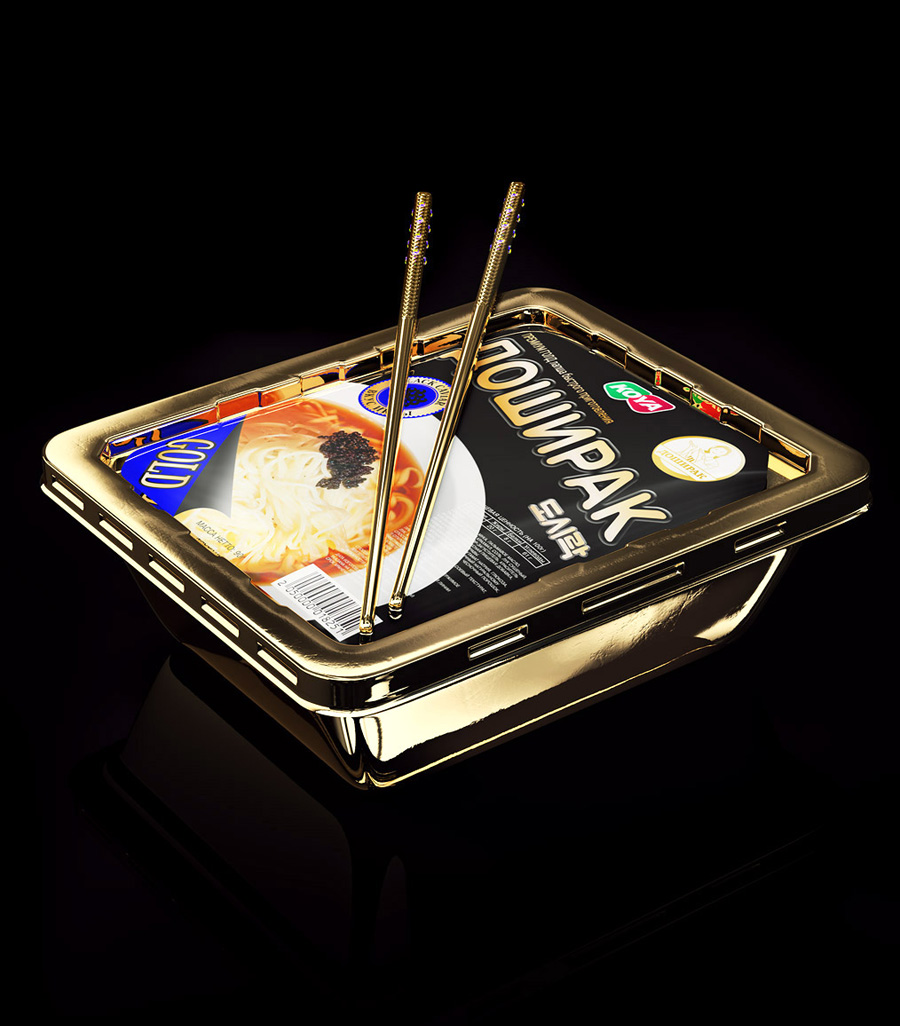
Thought that Asians were the only ones who eat instant noodles but have just learnt that it has become “Russia’s second bread”. ( This came from an article in 2001). Hard times and convenience have contributed to its increasing popularity in Russia over the past decade.
Many pooh-pooh its lack of nutritional value, and regard it as the poor man’s food, giving it a derogatory label, Bomi-paket, Russian slang which literally translates into “a tramp’s bundle”. However, many office workers, hikers find it a handy meal. Apparently, 20 packets of noodles is equivalent to one Big Mac in Russia.
Vladimir Kitov, whose article appeared in The Russia Journal, cited these other statistics:
“According to data from the GfK MR market-survey agency, sales of the noodle packages, which cost from 2 to 18 rubles, remained the fastest-growing segment of the Russian food market last year, totaling 1.7 billion rubles ($60 million). Overall sales of tomato ketchup, by contrast, came to just 40.1 million rubles ($1.3 million) for the same period.”

Doshirak is the Korean-based company with an enviable 20-percent market share in Russia. It even now sells instant noodles flavoured with black caviar. Check out the video clip by KBS World Radio here. ( Just click on the orange icon on the right).
sources:
http://world.kbs.co.kr/english/news/news_Cu_detail.htm?No=71810&id=Cu
http://www.russiajournal.com/node/5483
http://www.statemaster.com/encyclopedia/Instant-noodles
http://popsop.ru/wp-content/uploads/doshirak2.jpg
http://popsop.com/5648
Many pooh-pooh its lack of nutritional value, and regard it as the poor man’s food, giving it a derogatory label, Bomi-paket, Russian slang which literally translates into “a tramp’s bundle”. However, many office workers, hikers find it a handy meal. Apparently, 20 packets of noodles is equivalent to one Big Mac in Russia.
Vladimir Kitov, whose article appeared in The Russia Journal, cited these other statistics:
“According to data from the GfK MR market-survey agency, sales of the noodle packages, which cost from 2 to 18 rubles, remained the fastest-growing segment of the Russian food market last year, totaling 1.7 billion rubles ($60 million). Overall sales of tomato ketchup, by contrast, came to just 40.1 million rubles ($1.3 million) for the same period.”

sources:
http://world.kbs.co.kr/english/news/news_Cu_detail.htm?No=71810&id=Cu
http://www.russiajournal.com/node/5483
http://www.statemaster.com/encyclopedia/Instant-noodles
http://popsop.ru/wp-content/uploads/doshirak2.jpg
http://popsop.com/5648
Thursday, April 22, 2010
What To Do If Stranded In Incheon International Airport
First of all, my sympathies to those have been stranded in various airports around the world, no thanks to the volcanic eruption in Iceland. But honestly, for those who think they've got a raw deal being stuck in Incheon International Airport, I'd say I can think of worse airports to be stranded in for days. After all, it's been voted Best Airport for five consecutive years.


I had been too preoccupied finishing up my hanji box container at the Traditional Korean Cultural Experience Zone on the third floor of the Passenger Terminal ( East Wing: Gate 24 / West Wing: Gate 40) It was a very relaxing time concentrating on applying glue to the readily-cut pieces of hanji paper to the parts of the box which I could take home in a bag with printed description of the traditional craft.

Visitors with half an hour to spare can make their own traditional kites, knots, fans or paper crafts with the complimentary ready-to-be-assembled materials and guidance provided by the friendly English-speaking staff there. In previous visits, I had brought home my own hand-made souvenirs such as phone accessories made from jewelled toned silk pouches and a paper tray.
Apparently there are also musical performances on traditional instruments but you'd have to be pretty fortunate in terms of timing to catch these. But the Exhibition of Korean Crafts Hall is open pretty much all the time on the fourth floor of the Transfer Lounge. When I was there the last time, some beautiful embroidery work was featured there. There are also exhibits from the Cultural Museum of Korea displayed on the fourth floor in the Concourse Area. So if you didn't have time to visit museum in Seoul, here's your chance to catch up on some Korean history and culture.
There used to be a small supermarket located in one of the lower floors near the basement of IIA but I looked for it in vain during my last visit in 2008. More expensive retail outlets have taken over, I'm sorry to note. Those who wish to do last-minute shopping for their instant noodles now have to take a shuttle bus to the nearby E-mart hypermarket.
Hallyu fans may want to check out the KNTO space devoted to the Hallyu Wave between Gate #12-13 and Gate #1-2 on the arrival floor. ( Hours: 07:00 - 22:00; Tel: +82-32-743-2600~3). If you've lots of won to spare, pamper yourself to Hallyuwood star treatment in Spa on Air, a luxury spa within IIA. If not, spend your 500 won coins surfing on the Net in the many PCs available for use within the airport.
sources:
http://english.visitkorea.or.kr/enu/GK/GK_EN_2_7_2_1.jsp
http://english.chosun.com/site/data/html_dir/2010/04/20/2010042000398.html
http://en.wikipedia.org/wiki/Incheon_International_Airport
http://www.lifeinkorea.com/Travel2/440
http://www.airport.kr/eng/
http://www.korea4expats.com/news-Incheon-intl-airport.html
http://english.visitkorea.or.kr/enu/SI/SI_EN_3_1_1_1.jsp?cid=609933
http://www.kous.or.kr/foreign/eng/kous02.htm

Granted it's not a cheap place to find yourself in especially with your won or US dollars running out. However, Incheon International Airport has some special facilities for tourists which could keep visitors occupied for some time. Eversince I stumbled upon the Cultural Experience Zone for example, I've made it a point to visit it while on my way home from Korea. In fact, once, I was so engrossed in one activity that I had my name called out on the public address system because I hadn't boarded my plane yet.

I had been too preoccupied finishing up my hanji box container at the Traditional Korean Cultural Experience Zone on the third floor of the Passenger Terminal ( East Wing: Gate 24 / West Wing: Gate 40) It was a very relaxing time concentrating on applying glue to the readily-cut pieces of hanji paper to the parts of the box which I could take home in a bag with printed description of the traditional craft.

Visitors with half an hour to spare can make their own traditional kites, knots, fans or paper crafts with the complimentary ready-to-be-assembled materials and guidance provided by the friendly English-speaking staff there. In previous visits, I had brought home my own hand-made souvenirs such as phone accessories made from jewelled toned silk pouches and a paper tray.
Apparently there are also musical performances on traditional instruments but you'd have to be pretty fortunate in terms of timing to catch these. But the Exhibition of Korean Crafts Hall is open pretty much all the time on the fourth floor of the Transfer Lounge. When I was there the last time, some beautiful embroidery work was featured there. There are also exhibits from the Cultural Museum of Korea displayed on the fourth floor in the Concourse Area. So if you didn't have time to visit museum in Seoul, here's your chance to catch up on some Korean history and culture.
There used to be a small supermarket located in one of the lower floors near the basement of IIA but I looked for it in vain during my last visit in 2008. More expensive retail outlets have taken over, I'm sorry to note. Those who wish to do last-minute shopping for their instant noodles now have to take a shuttle bus to the nearby E-mart hypermarket.
Hallyu fans may want to check out the KNTO space devoted to the Hallyu Wave between Gate #12-13 and Gate #1-2 on the arrival floor. ( Hours: 07:00 - 22:00; Tel: +82-32-743-2600~3). If you've lots of won to spare, pamper yourself to Hallyuwood star treatment in Spa on Air, a luxury spa within IIA. If not, spend your 500 won coins surfing on the Net in the many PCs available for use within the airport.
sources:
http://english.visitkorea.or.kr/enu/GK/GK_EN_2_7_2_1.jsp
http://english.chosun.com/site/data/html_dir/2010/04/20/2010042000398.html
http://en.wikipedia.org/wiki/Incheon_International_Airport
http://www.lifeinkorea.com/Travel2/440
http://www.airport.kr/eng/
http://www.korea4expats.com/news-Incheon-intl-airport.html
http://english.visitkorea.or.kr/enu/SI/SI_EN_3_1_1_1.jsp?cid=609933
http://www.kous.or.kr/foreign/eng/kous02.htm
Wednesday, April 21, 2010
Ko-Un's Spring, For A. and YW.
Here's the first section from Young People's Songs for the Four Seasons by Ko-Un ( translated by Brother Anthony), for A. and YW.
Spring
I stood beside your little grave and gazed.
The unfamiliar haze of my flesh trembled
in response to the haze nearby.
Sorrow of that village where
invisible things become newly visible all winter long.
A stream flows by, nourishing roots of spurge.
My springtime seems to have returned along meadows
with their infant grass intent on putting an end
to a day's agony of falling spring rain.
And in the spring even your grave has been made new.
After waiting a while for something, I left again.
Tuesday, April 20, 2010
Korean Folk Village
For those who don’t have the time to visit the Hahoe Maeul, in Andong or Nagan-eup-seong near Suncheon right down south, Korean Folk Village near Suwon is the most convenient introduction one can get to the lives of Koreans in the past.

An open-air museum of sorts, the KFV gives visitors a vivid impression of what life was like in Korea during the Joseon Dynasty.

There are various houses ranging from a humble peasant’s cottage to an aristocrat’s mansion, an array of shops with wares ranging from traditional medicine to straw sandals.

See for yourself the difference between the northern and southern styles of traditional home architecture. Observe craftsmen at work making pots, horseshoes, ropes and paper the traditional way.

Check out the various foot bridges which span the stream hugging the eastern side of the KFV. Satisfy your curiosity about what a Korean haunted house looks like and visit the local female shaman.


Some Suggestions:
1. Getting there – click here.
2. Be prepared to spend more than half the day there – work out a walking route around the scheduled performances ( wedding ceremony, acrobats, samul-nori, horse riding).

Check out the map on the KFV website.


3. There used to be a two tier pricing system - the cheaper one didn’t include admission to the amusement park side but if you were visiting with children, you probably had to go for the pricier option. Looks that the option's no longer available from the looks of the current ticketing scheme on the KFV website though the KNTO website displays the older ticketing schedule ( I'm guessing the KNTO page needs updating!)
12,000 won (adults), 9,000 won ( adolescents and seniors), 8,000 won (child)
4. Read up on the various sections in the KFV website before you go. The information brochure which you get when you buy your ticket doesn’t give as much and the explanatory boards are sketchy.
5. KBS World Radio video on KFV – juxtaposes old photos from its archives with present day video shots.

6. Note that the food stalls in the open-air market section are tucked right at the back and there’s a long walk to get there, so if you tend to feel peckish throughout the day, carry your own snacks and water.
7. KFV has been the outdoor location site for various dramas such as Daejanggeum and Painter of the Wind.

sources:
http://world.kbs.co.kr/english/culturenlife/culturenlife_touringkorea_detail.htm?No=436
http://www.koreanfolk.co.kr/folk/english/contact/contact_tran.html
http://www.virtualtourist.com/travel/Asia/South_Korea/Soul_tukpyolsi/Seoul-1058426/Things_To_Do-Seoul-Korean_Folk_Village-BR-2.html
http://en.wikipedia.org/wiki/Korean_Folk_Village
http://english.visitkorea.or.kr/enu/SI/SI_EN_3_1_1_1.jsp?cid=264121

Pretty pavilion beside a wishing tree in KFV
An open-air museum of sorts, the KFV gives visitors a vivid impression of what life was like in Korea during the Joseon Dynasty.

Greet the wooden guardians which protect the village
There are various houses ranging from a humble peasant’s cottage to an aristocrat’s mansion, an array of shops with wares ranging from traditional medicine to straw sandals.

Rustic traditions kept alive here; wonder if the beast is on the KFV payroll
See for yourself the difference between the northern and southern styles of traditional home architecture. Observe craftsmen at work making pots, horseshoes, ropes and paper the traditional way.

Dried calabashes, corn, fermented soybean bricks, red peppers - staples of a bygone era
Check out the various foot bridges which span the stream hugging the eastern side of the KFV. Satisfy your curiosity about what a Korean haunted house looks like and visit the local female shaman.

This footbridge is one of easiest ones to cross; there are others which test your balance!

Get married the traditional Korean way in KFV - serious. But book in advance!
Keep a lookout for your favourite Hallyu star as this place is a popular shooting location for K historical drama. Some Suggestions:
1. Getting there – click here.
2. Be prepared to spend more than half the day there – work out a walking route around the scheduled performances ( wedding ceremony, acrobats, samul-nori, horse riding).

Don't miss this - Samulnori performances - one of the highlights of KFV
Check out the map on the KFV website.


12,000 won (adults), 9,000 won ( adolescents and seniors), 8,000 won (child)
4. Read up on the various sections in the KFV website before you go. The information brochure which you get when you buy your ticket doesn’t give as much and the explanatory boards are sketchy.
5. KBS World Radio video on KFV – juxtaposes old photos from its archives with present day video shots.

Snacks on sale in the open-air marketplace
6. Note that the food stalls in the open-air market section are tucked right at the back and there’s a long walk to get there, so if you tend to feel peckish throughout the day, carry your own snacks and water.
7. KFV has been the outdoor location site for various dramas such as Daejanggeum and Painter of the Wind.

sources:
http://world.kbs.co.kr/english/culturenlife/culturenlife_touringkorea_detail.htm?No=436
http://www.koreanfolk.co.kr/folk/english/contact/contact_tran.html
http://www.virtualtourist.com/travel/Asia/South_Korea/Soul_tukpyolsi/Seoul-1058426/Things_To_Do-Seoul-Korean_Folk_Village-BR-2.html
http://en.wikipedia.org/wiki/Korean_Folk_Village
http://english.visitkorea.or.kr/enu/SI/SI_EN_3_1_1_1.jsp?cid=264121
Monday, April 19, 2010
Quintessential Spring in Korea Photos
My posting on the Quintessential Winter in Korea Photos was also featured in Korea.net. Thought it was time to follow up with my choice of pics for spring.


http://www.trendhunter.com/photos/70623/4
http://yooneunhye.net/blog/yoon-eun-hye-basic-house-china-spring-2010/
http://english.triptokorea.com/english/viewtopic.php?t=1231&sid=2fca5a375d838dd5646bfc803cfee6db
http://www.flickr.com/photos/13119988@N00/2465650201
http://world.kbs.co.kr/english/news/news_photo_detail.htm?No=14536¤t_page=2
http://world.kbs.co.kr/english/news/news_photo_detail.htm?No=14510¤t_page=3
http://world.kbs.co.kr/english/news/news_photo_detail.htm?No=14346¤t_page=4
http://world.kbs.co.kr/english/news/news_photo_detail.htm?No=12477¤t_page=22
http://world.kbs.co.kr/english/news/news_photo_detail.htm?No=10434¤t_page=40
http://world.kbs.co.kr/english/news/news_photo_detail.htm?No=4368¤t_page=102
http://world.kbs.co.kr/english/news/news_photo_detail.htm?No=4317¤t_page=103
http://world.kbs.co.kr/english/news/news_photo_detail.htm?No=12683¤t_page=20
http://www.koreatimes.co.kr/www/news/art/2010/04/203_62582.html

1. Plowing the Fields - This one reminds me of a picture of Breughel's "Fall of Icarus" - Doesn't even need an image of a boy falling into the water in the far distance with the recent Cheonan tragedy still fresh in our minds.

2. Making Soybean Sauce- Children continue a spring tradition by learning to make gochujang. (Yonhap News)

3. Spring blossoms and Spring Fashion Catalogues: The new season heralds pastel blossoms and new fashion catalogues. Vogue Korea April 2010 has an editorial entitled "Will you Date Me?" with a decidedly retro and romantic look.

4. Outdoor traditional performances - "Nori" or folk music performers enthrall outdoor audiences as they welcome the return of spring. (KBS WORLD / Jang Jin-kyoung)

5. Hanja on Hanji - Calligraphy of couplets written on paper and then pasted on doors are another custom observed during Ipchun.

6. Spring cleaning - An annual community service at Gyeongbuk Palace by volunteers to spruce up the National Treasure. (KBS WORLD / Sung Dae-woo) From the KNTO website: "The Cultural Heritage Administration of Korea will be holding a reenactment of Spring Cleaning at the royal palaces....The event aims to provide tourists with a chance to experience routine maintenance & cleanup activities, depicting palaces’ traditional preparation in welcoming in the spring." Click here for the schedule of events and hands-on experiences which will be held until 25th April.

7. Restoring the Grass - Workers at Seoul Plaza replace grass which was killed by the winter frost or damaged by the ice- skating rink set up in winter. (KBS WORLD / Jang Jin-kyoung)

8. Bring out the Masks - You know it's spring when face masks become fashionable in Korea with the scourge of yelllow dust blowing in from China.

9. Preparing Lotus Lanterns - If you visit Buddhist temples in spring, you're likely to come across ajummas making lotus lanterns in preparations for Buddha's birthday.

sources: 
10. Savouring the Greens - Naeng-i, or shepherd's purse, Dallae or wild garlic, Ssuk or wormwood are among the spring herbs that Koreans can enjoy during this season.
http://www.trendhunter.com/photos/70623/4
http://yooneunhye.net/blog/yoon-eun-hye-basic-house-china-spring-2010/
http://english.triptokorea.com/english/viewtopic.php?t=1231&sid=2fca5a375d838dd5646bfc803cfee6db
http://www.flickr.com/photos/13119988@N00/2465650201
http://world.kbs.co.kr/english/news/news_photo_detail.htm?No=14536¤t_page=2
http://world.kbs.co.kr/english/news/news_photo_detail.htm?No=14510¤t_page=3
http://world.kbs.co.kr/english/news/news_photo_detail.htm?No=14346¤t_page=4
http://world.kbs.co.kr/english/news/news_photo_detail.htm?No=12477¤t_page=22
http://world.kbs.co.kr/english/news/news_photo_detail.htm?No=10434¤t_page=40
http://world.kbs.co.kr/english/news/news_photo_detail.htm?No=4368¤t_page=102
http://world.kbs.co.kr/english/news/news_photo_detail.htm?No=4317¤t_page=103
http://world.kbs.co.kr/english/news/news_photo_detail.htm?No=12683¤t_page=20
http://www.koreatimes.co.kr/www/news/art/2010/04/203_62582.html
Sunday, April 18, 2010
Nature Plays Cat and Mouse With Korea's Weather Forecasters?
I used to trust the annual schedules that indicated the best times to visit different parts of Korea to see the cherry blossoms - didn't have problems in 2007 using the schedule posted on the KNTO website to plan my itinerary. But these days, it looks as if nature is making difficult the job of predicting when the cherry blossoms will appear. The discrepancy of more than a week is quite glaring and most inconvenient for those outside Korea who want to fly in specially to see these springtime flowers and to take part in the spring festivals. Now I wonder how much credence the autumn foliage schedule will have.


"What took you so long?" Cherry blossoms finally bloom at Yeouido around the 16th and 17th of March.

According to this 2010 schedule taken from the KNTO website, the cherry trees were expected to bloom around the 6th of April in Seoul.
sources:
http://english.chosun.com/site/data/html_dir/2010/04/19/2010041900396.html
http://asiaenglish.visitkorea.or.kr/ena/FU/FU_EN_15.jsp?nCategoryID=&searchType=&keyword=&gotoPage=5&cid=970238&cCode=&nCategoryID=&searchType=&searchKeyword=
Saturday, April 17, 2010
Pillaged National Treasure - A Lost Cause?
The French did it. The Germans did it. The Brits did it. In fact, anyone who was in the position to do so, probably has done so in the past. For that matter, museum curators probably would still do it if they could get away with it.
What am I talking about? Robbing a nation of its national treasures. Since I was on the subject of Hwaseong and uigwe a few postings back, I wanted to follow up with the knotty problem of recovering national treasures from the looters. There are many Korean treasures sitting in the vaults of museums or private collectors in Japan, the USA and Europe as a result of invasions, looting, smuggling and illegal purchases.
These figures were quoted in the JoongAng Daily: "According to the Cultural Heritage Administration in Korea, 107,857 pieces of Korean cultural properties were scattered throughout 18 countries as of the end of last year. Of these, more than 61,000 - by far the most - were in Japan, followed by about 27,000 in the United States and almost 4,000 in China. Only about 7,500 of the looted pieces have been returned to date."


http://asiaenglish.visitkorea.or.kr/ena/SI/SI_EN_3_1_1_1.jsp?cid=762951
http://www.koreatimes.co.kr/www/news/art/2010/01/148_15229.html
http://en.wikipedia.org/wiki/Uigwe
http://muse.jhu.edu/journals/archives_of_asian_art/v058/58.yi.html
http://asiaenglish.visitkorea.or.kr/ena/CU/CU_EN_8_4_5_5.jsp
http://www.museum-security.org/?p=3705
http://joongangdaily.joins.com/article/view.asp?aid=2898272
http://www.koreabrand.net/en/now/now_view.do?CATE_CD=0028&SEQ=533
http://www.eapubc.net/books/?mode=recommendation&id=96&PHPSESSID=90fe67ad982a835f22c9e0dfdeef2110
http://www.vuw.ac.nz/~caplabtb/dprk/Korea_Report0708.doc
http://www.worldhistoryblog.com/2004/06/hwasong-fortress-in-suwon.html
http://en.wikipedia.org/wiki/French_Campaign_against_Korea,_1866
http://www.hwasong.henny-savenije.pe.kr/
What am I talking about? Robbing a nation of its national treasures. Since I was on the subject of Hwaseong and uigwe a few postings back, I wanted to follow up with the knotty problem of recovering national treasures from the looters. There are many Korean treasures sitting in the vaults of museums or private collectors in Japan, the USA and Europe as a result of invasions, looting, smuggling and illegal purchases.
These figures were quoted in the JoongAng Daily: "According to the Cultural Heritage Administration in Korea, 107,857 pieces of Korean cultural properties were scattered throughout 18 countries as of the end of last year. Of these, more than 61,000 - by far the most - were in Japan, followed by about 27,000 in the United States and almost 4,000 in China. Only about 7,500 of the looted pieces have been returned to date."

An example of the beautiful banchado, illustrations in uigwe
Frustrated with the government's foot-dragging or tip-toeing around the issue, some civic groups from Korea have taken their own initiative to recover some of these artefacts. For instance, a group calling themselves Cultural Action have submitted their own appeal to the French government to return 296 uigwe from the Joseon Dynasty. About 30 of them were specially produced for the royal family and so they are even more valuable as unique texts with no other copies of them.

The library in Ganghwado which the Joseon kings thought could provide adequate protection for the royal uigwe. How wrong they were.
The uigwe intended for the eyes of the Joseon kings were made of superior-quality materials and had illustrations not found in ordinary uigwe. Unfortunately they were stolen from Oegyujanggak, the library built by King Jeongjo when the French military overran Ganghwa-do in 1866.

The French soldiers had burnt most of the library and its contents but were impressed enough by the beauty of these Joseon protocol records meant for the kings to carry them back to France. Then less than 30 years ago, Park Byeong-seo, a Korean working at the French museum stumbled upon them among Chinese artefacts and since then, the Koreans have been crusading to recover these documents.
Join the queue, my friends.
The Greeks have been trying for ages to recover the Elgin Marbles ( did you know that "elginism" is the term given to the act of cultural vandalism?) ; the treasures of various Chinese dynasties are as widely scattered as Chinatowns over the face of the earth and the Egyptians have their own wish list of things they'd like to get back from various museums around the world.
I'm not suggesting that members of the Cultural Action give up their quest but I would humbly submit that their energy could be more constructively spent getting electronic copies of the uigwe in France, translating them into various languages for people around the world to appreciate and learn from the insights gathered from the minds of those who lived in the past. I know there are already digital copies put up on the Internet but I wonder when those who can't read the traditional Chinese script can benefit from this project.

Kim Mun-sik and Shin Byung-joo's book, published in 2005 by Dolbegae, analyzes uigwe.
sources:
http://www.elginism.com/definition/http://asiaenglish.visitkorea.or.kr/ena/SI/SI_EN_3_1_1_1.jsp?cid=762951
http://www.koreatimes.co.kr/www/news/art/2010/01/148_15229.html
http://en.wikipedia.org/wiki/Uigwe
http://muse.jhu.edu/journals/archives_of_asian_art/v058/58.yi.html
http://asiaenglish.visitkorea.or.kr/ena/CU/CU_EN_8_4_5_5.jsp
http://www.museum-security.org/?p=3705
http://joongangdaily.joins.com/article/view.asp?aid=2898272
http://www.koreabrand.net/en/now/now_view.do?CATE_CD=0028&SEQ=533
http://www.eapubc.net/books/?mode=recommendation&id=96&PHPSESSID=90fe67ad982a835f22c9e0dfdeef2110
http://www.vuw.ac.nz/~caplabtb/dprk/Korea_Report0708.doc
http://www.worldhistoryblog.com/2004/06/hwasong-fortress-in-suwon.html
http://en.wikipedia.org/wiki/French_Campaign_against_Korea,_1866
http://www.hwasong.henny-savenije.pe.kr/